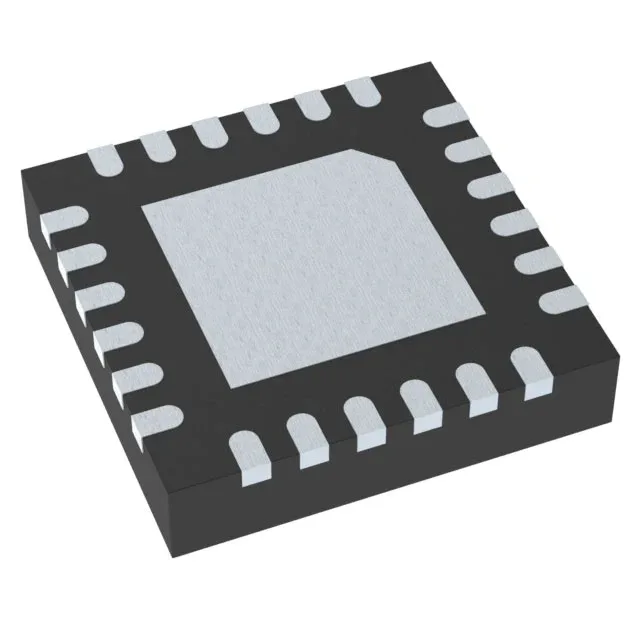
The BQ24271RGET is a single-cell Li-Ion battery charger from Texas Instruments, controlled over an I²C interface. Its headline rating is a maximum charge current of 1.5 A, which sets the charge time for a typical 3.7 V Li-Ion pack. For a 2000 mAh cell, that is roughly an 80-minute constant-current charge phase before the CV taper begins. The charge current is programmable via I²C, so the host microcontroller can adjust the rate based on input power availability, battery temperature, or system load. This is the feature that distinguishes it from a fixed-current charger — you can trade charge speed for thermal budget on the fly.
Protection set and package thermal reality
Fault protection covers over-temperature, over-voltage, and short circuit — the three failure modes that matter most for Li-Ion charging. The over-voltage protection clamps the battery voltage; the thermal shutdown prevents runaway if the 4x4 mm QFN pad cannot sink the heat from a sustained 1.5 A charge. The datasheet layout recommendation calls for at least nine vias in the pad area — a two-layer board with a solid ground plane works, but a four-layer stack gives better thermal spreading.