It delivers a programmable charge current up to 1.55 A and supports a maximum battery pack voltage of 4.44 V, making it a fit for portable devices using standard 4.2 V or 4.35 V Li-ion cells.
NRND — plan your replacement now
This means TI has flagged the part for eventual discontinuation; new designs should not start with this charger, and existing BOMs should identify a replacement or last-time-buy strategy. No official replacement part number is listed on the record. For a pin-compatible or functional alternative, the buyer should cross-reference the BQ24156 family or consult TI's product-change notifications.
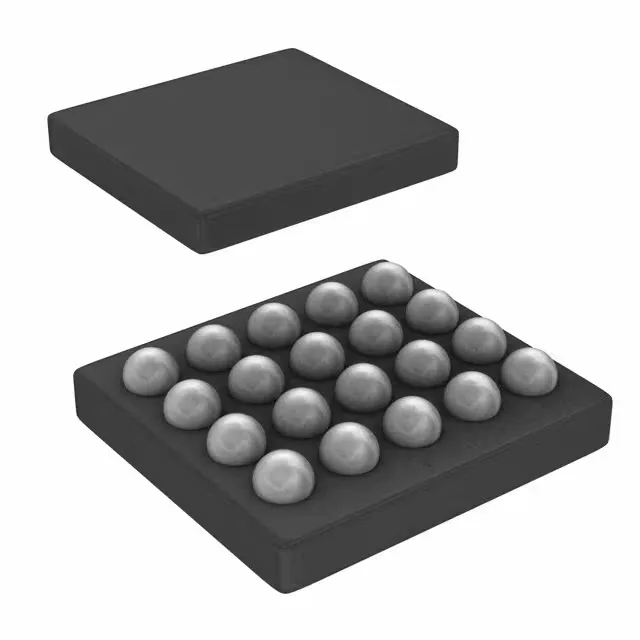
20-DSBGA package — reflow and footprint notes
This is a wafer-level chip-scale package — the bumps are on the bottom of the die, no plastic overmold. For the EMS engineer: DSBGA packages require careful stencil design (typically 0.125 mm or thinner stencil with aperture matching the bump diameter), a reflow profile that avoids excessive thermal shock, and MSL handling per the TI label. The board footprint must match the TI-recommended land pattern — the bump pitch is fine enough that a misaligned stencil causes opens. No tombstoning risk with a single-die package, but the small bump area means the part is sensitive to board flex.
The maximum charge current of 1.55 A sets the charge-rate ceiling for the single cell. For a typical 2000 mAh Li-ion cell, this is a 0.77C rate — fast enough for most portable devices but not a high-current quick-charge part. The programmable current (via I²C) lets the firmware adjust the rate for thermal management or USB input current limits. The 4.44 V maximum battery pack voltage covers both 4.2 V and 4.35 V termination targets. The I²C interface allows the host to set the float voltage and charge timer, and to read back fault status. The supply voltage max is 9 V — compatible with 5 V USB or 9 V wall adapters.