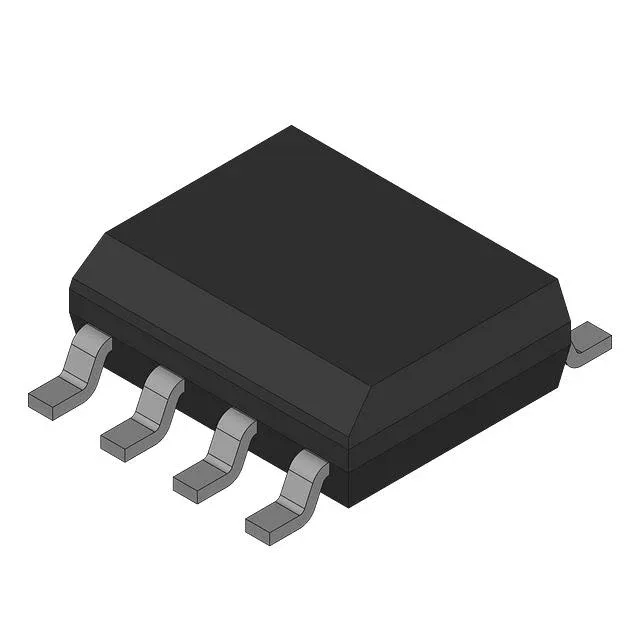
What AEC-Q100 qualification means for your BOM
For a procurement team, this is the difference between a part that ships with a PPAP-ready data package and one that requires separate qualification. Capable is not qualified; this part is qualified.
Temperature range — military-grade coverage
That makes it a fit for avionics, satellite, downhole drilling, and any under-hood automotive location where the silicon sees both cold-soak and exhaust-side heat. The 125°C upper limit is the standard AEC-Q100 Grade 1 boundary, but the -55°C low end goes beyond typical automotive Grade 1 (which usually stops at -40°C).
It will not drive a high-speed ADC at full throughput, nor will it slew a 10 Vpp output at 100 kHz — the slew-rate limit there is roughly 57 kHz. For a 16-bit ADC running at 200 kSPS, it is marginal; budget settling time carefully.
Rail-to-rail output and supply headroom
Input common-mode range, however, is not rail-to-rail — it stops 1.1 V below the positive rail in typical CMOS designs, so high-side current sensing at low supply voltages requires a level shift. The supply range spans 4.4 V to 16 V, covering 5 V and 12 V automotive rails cleanly.
For a production BOM, that means no near-term obsolescence risk.