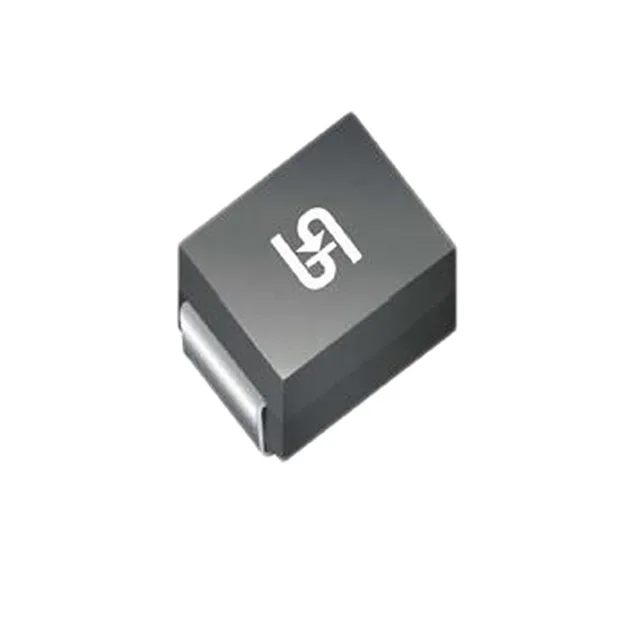
What the 1.5SMC91CAHM6G protects and why the 1500W rating decides the fit
At that pulse width, 1500W defines how much surge energy the device absorbs before the clamping voltage (125 V maximum at 12.6 A peak) is exceeded. A lower-rated TVS on the same rail clamps harder and may not survive the first event. The standoff voltage of 77.8 V typ means the TVS sits invisible to the rail during normal operation — it does not conduct until the transient pushes the line above standoff. The protection window runs from 77.8 V up to the 86.5 V minimum breakdown, then into clamping at 125 V. For a 48 V automotive rail (transient limits per ISO 7637-2), this gives enough headroom: normal operating transients stay below standoff, and genuine load-dump events are clamped within the 125 V ceiling.
An industrial-grade TVS without AEC-Q101 may share the voltage rating but carries no automotive qualification flow. The DO-214AB (SMC) package with its thermal pad and surface-mount form factor suits high-current automotive PCB layouts — the exposed die-attach pad and wide cathode tab carry the surge current away from the junction. Reflow profile tolerance follows standard lead-free assembly; the 150°C Tj ceiling leaves margin against the reflow peak.
Sourcing posture and BOM planning
The 1.5SMC91CAHM6G is listed Active by Taiwan Semiconductor Corporation. The Tape & Reel packaging aligns with standard automotive assembly reels — confirm reel orientation and peel-angle requirements against your pick-and-place feeder spec before committing to a second source.