What this part is and what it protects
The 1.5SMC6.8CAHR7G is an AEC-Q101 qualified unidirectional TVS Zener in the DO-214AB (SMC) package — designed to clamp voltage transients on automotive power rails before they reach downstream circuitry. The CA suffix designates the bidirectional variant — one bidirectional channel handles both polarities of transient event, which simplifies layout on sensor or communication lines that see symmetrical ESD or inductive swings.
Clamping performance — the numbers that decide protection fit
Reverse standoff voltage is 5.8 V typ — the diode sits idle below this and draws only leakage current. Breakdown triggers at 6.46 V minimum, clamping at 10.5 V maximum under the peak pulse current. The 10.5 V ceiling is what the protected load actually sees during a transient, so the downstream circuit must tolerate that as its worst-case stress level. Peak pulse current is 150 A at 10/1000 µs — this is the current the device can shunt without failing. The actual clamp voltage at 150 A stays within the 10.5 V datasheet ceiling, so the 1.5 kW rating is not a thermal average but a real SOA guarantee at the stated waveform.
Temperature grade for under-hood and chassis deployment
The upper bound is the key number for engine-compartment and direct-chassis mounting — an ECU in a sealed enclosure that runs hot in summer still has headroom before the TVS junction hits its limit. AEC-Q101 qualification means the part passed automotive-grade humidity, temperature cycling, and surge stress screening. For a sourcing buyer this is the gate-check: the part is not just a commercial TVS in the same package, it is the version automotive procurement teams require for safety and instrument bus lines.
Package, mounting, and field-service fit
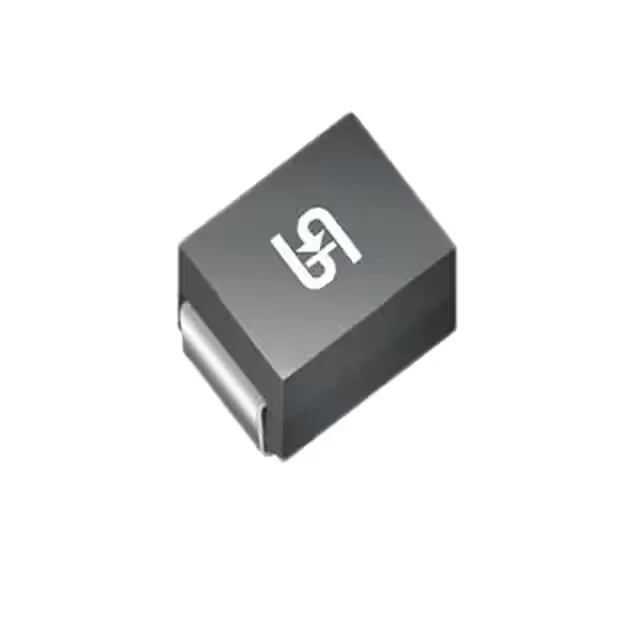
The DO-214AB SMC is a three-lead gull-wing in a rectangular body — polarity band on the cathode side is visible under magnification and marks clearly for field replacement. The SMC sits flat on the board with a wide thermal pad under the cathode tab; adequate copper spreading on the pad helps the part survive repeated transients without overheating the epoxy body. Tape-and-reel packaging means the part is compatible with standard SMT pick-and-place lines. For field rework the SMC is hand-solderable with a fine-tip iron; no hot-air station is required provided the pad land pattern is accessible and flux-cleaning is part of the service procedure.