What 1500W peak pulse means for a telecom line card
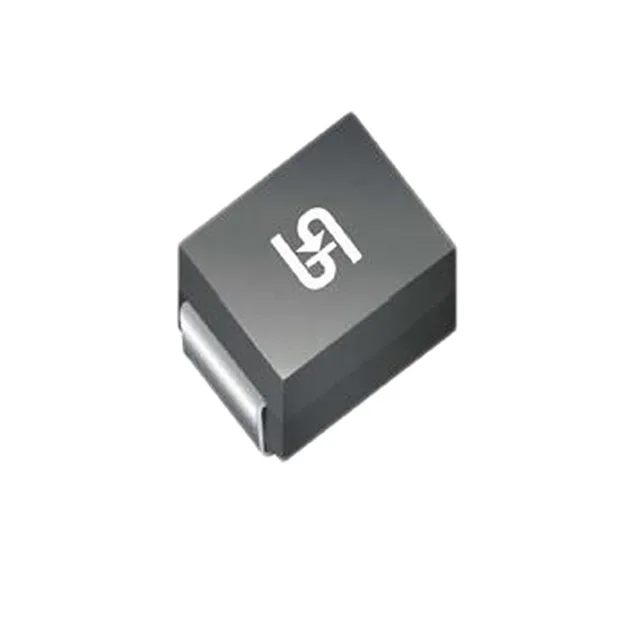
The 1.5SMC91CA V7G is a unidirectional TVS diode — the type you route across a signal pair or power rail to clamp transients before they reach downstream silicon. Rated 1500 W peak pulse at a 10/1000 µs wave shape, it survives the slow-front surge events typical of telecom infrastructure: lightning-induction on long cable runs, relay bounce on DC power feed, and load dumps at the power entry point. The clamping voltage ceiling of 125 V at the rated peak current of 12.6 A means the protected node never sees more than that — the downstream circuit sees a defined stress floor regardless of surge amplitude up to the 1.5 kW rating.
Standoff, breakdown, clamping — the voltage hierarchy
Reverse standoff is the working voltage: 77.8 V typical means the TVS sits idle and draws only leakage current while the line runs at normal operating voltage. The 125 V maximum clamping voltage is the ceiling the downstream circuit sees at 12.6 A — a telecom line card running 48 V nominal has roughly 30 V of headroom to the standoff rating, which is the standard derating margin for telecom protection designs.
150°C junction temperature and the telecom enclosure context
Junction temperature rating is 150 °C (TJ). Telecom outdoor cabinets in summer sun can push ambient well above 85 °C inside the enclosure; the thermal resistance of the SMC body to the board pad determines whether the junction stays within margin at the peak pulse current. The -55 °C low end covers outdoor cabinet cold-start and remote terminal equipment at altitude. The single bidirectional channel covers a two-wire balanced pair with one device — no need for a dual-array when the protected port is single-ended.
Active production — what that means for sourcing
Available through independent distribution against an RFQ; quantity, pricing, and lead time confirmed at quote time. No official successor or cross-reference is listed for this base number.