Clamping voltage and protection margin
The 1.5SMC91CA R7G: The reverse standoff of 77.8 V marks the working voltage the TVS sees in normal operation — it sits dormant and draws only leakage current below that level. That 125 V ceiling is what the downstream circuit must survive — it defines the protection margin, not the standoff number. The 1.5SMC series carries a 1500 W peak pulse rating at the standard 10/1000 µs surge shape — this is the industry-common waveform for AC-line and DC-rail transient simulation, so the rating is directly comparable across competing TVS families in the same package.
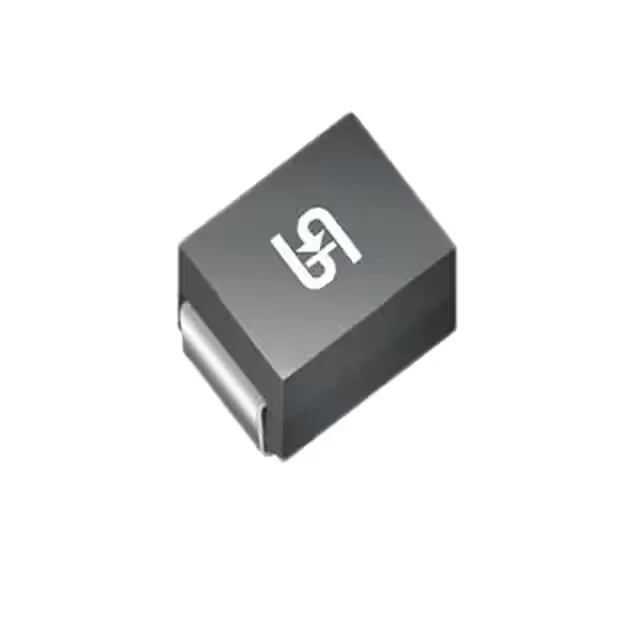
DO-214AB SMC package and board integration
The DO-214AB (SMC) is the standard SMC footprint for unidirectional and bidirectional TVS diodes — the same land pattern used across Vishay, Littelfuse, and ON Semiconductor 1.5SMC-pin-compatible parts. For layout, the cathode bar on the package marking identifies the TVS polarity; on the bidirectional CA variant the orientation still matters for the polarity-marked pin in relation to the circuit node being protected. At full surge repetition the clamping energy budget drives the junction temperature delta; the datasheet thermal resistance figure sets the board-area design rule.
Sourcing posture and lifecycle
The 1.5SMC family is broadly supported across multiple manufacturers in the same SMC package, so a second-source qualification is viable if single-source risk is a concern.