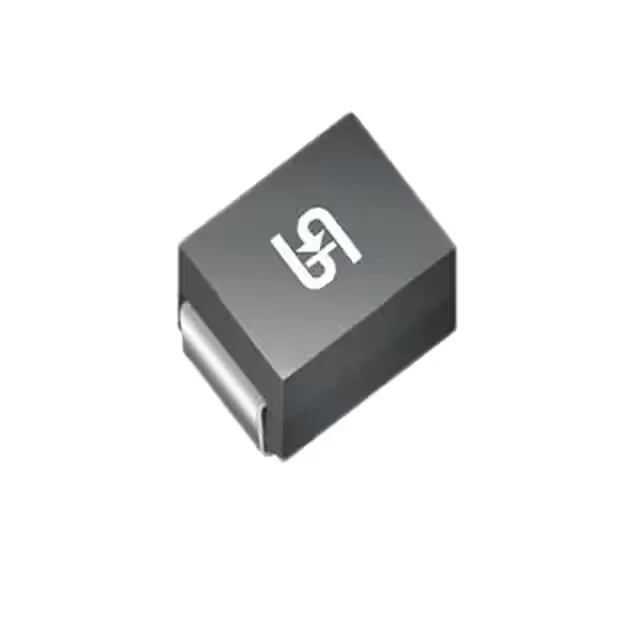
The 1.5SMC91AHR7G: The 77.8 V reverse standoff is the working voltage the line sits behind; the 86.5 V minimum breakdown is where the device begins clamping, and the 125 V maximum clamping voltage is what the downstream circuitry sees at the rated 12.6 A peak current. In a 12 V automotive rail, a 77.8 V standoff gives roughly 6× headroom above the nominal supply — enough to survive cold-crank transients and inductive dump events without conducting continuously. The AEC-Q101 qualification means the die and assembly have passed the automotive stress grade: temperature cycling, humidity bias, and surge testing to the JEDEC JESD22 profile. That is the gate a Tier-1 ECU supplier's procurement spec requires before this part enters a BOM for an under-hood module. Junction temperature limit is 150 °C, which maps to the -55 to 150 °C operating range — the full under-hood ambient band in most markets, with margin left before the thermal shutdown ceiling.
DO-214AB SMC package for automated line feed
Surface-mount DO-214AB (SMC) is the standard automotive TVS footprint — the 2.8 mm body height sits flat for reflow, and the wide cathode band on the sleeve makes optical inspection unambiguous on the AOI station. Tape-and-reel packaging at the supplier device package level is what a kitting lead needs to confirm feeder-ready cut tape versus full reel for a high-volume build run. One unidirectional channel means no bidirectional confusion on the layout — the cathode band connects to the positive rail. Power line protection is flagged No, which is expected for a point-of-load TVS rather than a bus-level suppressor.