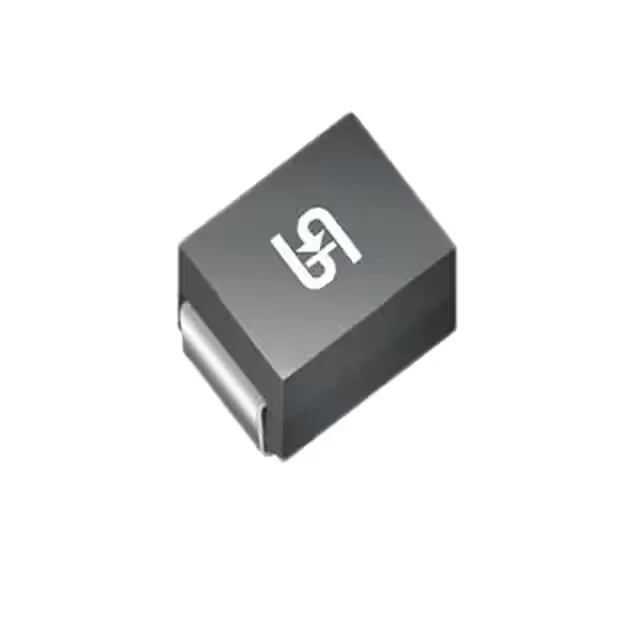
What the clamping ratings mean for protection design
The 1.5SMC91A M6G: The 77.8 V reverse standoff is the working voltage — the TVS stays inactive and draws only leakage current while the rail sits below this level. When a transient drives the line above the 86.5 V minimum breakdown, the device avalanches into conduction and clamps the peak at 125 V. That 125 V clamping ceiling is the stress voltage the downstream load sees during the event — the difference between that ceiling and the load's absolute-maximum rating is your protection margin.
Thermal and package considerations
Junction temperature rating extends to 150°C — the upper bound reflects the diode's ability to absorb transient energy without the junction temperature overshooting the SOA during repeated events. Surface-mount, tape-and-reel packaging suits high-volume assembly. The DO-214AB footprint is widely supported by alternate suppliers in the same series, which matters for BOM de-risk if you want a second source — the 1.5SMC91 base number is the common reference for cross-lookup.