1500W peak pulse at 10/1000µs — what the headline rating means
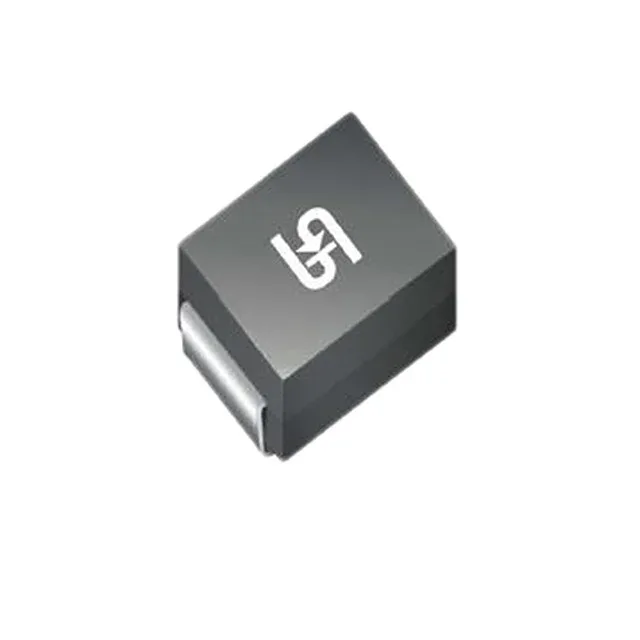
The 1.5SMC9.1A R7G ships on Tape & Reel, rated for surface-mount assembly.
Standoff, clamping, and peak pulse current — the three numbers that govern TVS selection
Reverse standoff of 7.78 V defines the maximum voltage the TVS sees during normal operation without conducting. Clamping voltage of 13.4 V at peak pulse current of 117 A is what the downstream circuit is protected to during a fault event — the TVS absorbs the surge energy and clamps the voltage at that level, so the protected rail sees 13.4 V, not the raw transient. These two numbers — standoff and clamping — define the protection window and drive the selection decision for any sensitive rail at this voltage band.
Where a 1.5 kW TVS in this voltage band protects the rail
General-purpose applications across industrial control, consumer electronics, and telecom hardware all use sensitive rails in the 5–12 V band that need a TVS to clamp transients. Minimum breakdown of 8.65 V gives a tight 8% window between breakdown floor and nominal standoff (7.78 V), which is expected for a Zener-based TVS in this series.