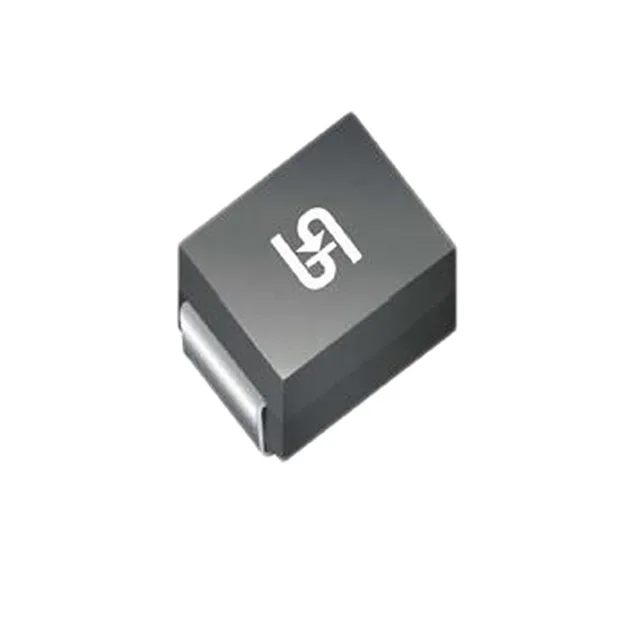
What the clamping and standoff ratings mean for the protection circuit
The 1.5SMC82CAHM6G: Bidirectional TVS diode, 70.1 V reverse standoff (typ) — the working voltage the line sits below during normal operation. Breakdown kicks in no lower than 77.9 V, clamping the transient peak to 113 V max at 13.9 A peak pulse (10/1000 µs). That 113 V ceiling is what the downstream IC sees during a surge event; a 1.5 kW peak-pulse rating means the package survives the event without going short. The CA suffix confirms bidirectional — it clamps both polarities, so a single device protects a floating or AC-coupled node without a diode bridge.
Automotive qualification and thermal margin
AEC-Q101 qualified with a junction temperature limit of 150 °C. The -55 °C low end covers cold-soak startup in unheated environments. For a 12 V automotive rail the derating margin between 70.1 V standoff and the 14 V nominal is comfortable; the real stress is the transient suppress — the diode sits dormant until a load dump or inductive kick fires it.
DO-214AB SMC footprint and assembly notes
SMC (DO-214AB) package with surface-mount termination. Tape-and-reel packaging suits high-volume pick-and-place. The claw-style DO-214AB body sits flat on the pad; the anode/cathode polarity marking matters for bidirectional variants — confirm the band orientation against the layout, since the CA bidirectional type has no polarity band and relies on device marking for identification. Solder reflow profile follows standard lead-free assembly; the 150 °C Tj rating gives headroom against board-level reflux spikes.