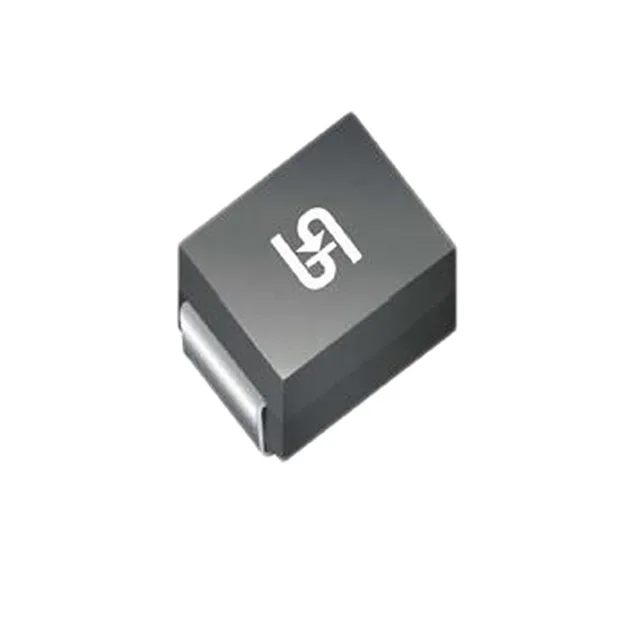
The 1.5SMC82AHR7G: That 113 V clamping ceiling is the number the downstream circuitry sees during the event, so the protected rail must hold off at least that much between transients. The reverse standoff of 70.1 V typ is where the TVS sits idle in normal operation — below this the device leaks minimally and the protected line runs clean. The 77.9 V minimum breakdown is where conduction begins, and the gap between 70.1 V standoff and 113 V clamping gives roughly 43 V of headroom for normal automotive supply variation before the suppressor engages.
AEC-Q101 and the automotive temperature band
AEC-Q101 qualification means the die and package have passed the automotive council stress tests — temperature cycling, high-temperature reverse bias, and surge life — at the grades this part carries. The unidirectional polarity clamps one polarity only — it protects a positive supply rail against transients that drive the line above Vcc. For a bidirectional or AC rail the part needs a different polarity configuration; this one is the positive-rail TVS workhorse in the 1.5SMC family.
The DO-214AB (SMC) is the standard automotive TVS footprint — a wide, low-profile body that sits flat on the pad with a generous metallization under the anode for thermal dissipation. Peak pulse current flows through the die on a short thermal pulse; the lead frame and solder pad under the package carry heat away during the event. A solid solder joint and adequate pad area matter more here than for a low-power component — under-clocked pad fill causes the junction to run hotter on a surge. Surface-mount Tape & Reel packaging suits automated pick-and-place on the production line. For a storeroom holding, reel integrity and dry storage matter — the 1.5SMC series uses a glass-passivated die in a molded body, and moisture sensitivity is not a first-order concern the way it is for a plastic-bodied MCU, but a sealed bag with desiccant is still the right storage posture before assembly.
Active production — what that means for sourcing
The part is listed Active with no stated obsolescence notice or official successor. The base product number 1.5SMC82 anchors it to the 82 V breakdown region of the 1.5SMC series — same family footprint and pinout, so other voltages in that series are potential drop-in alternatives if the design can tolerate a different standoff or clamping level. Sourced to order through independent distribution against the BOM quantity. For volume automotive programs the usual trace requirement is the full AEC-Q101 PPAP package; confirm scope with your supplier before committing a high-volume build.