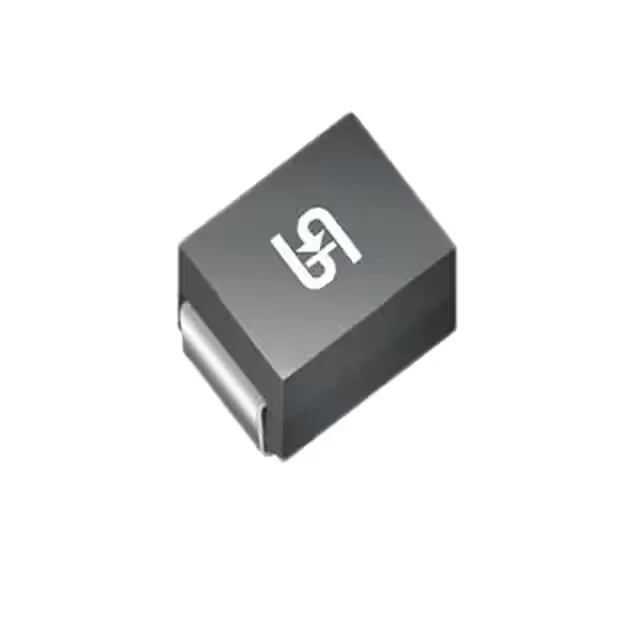
Clamping performance and standoff selection
The 1.5SMC82A M6G: The 1.5SMC82A clamps at 113 V maximum under a 13.9 A peak pulse (10/1000 µs), which means the downstream circuit sees no more than 113 V across the TVS terminals during a transient event — the standoff rating of 70.1 V keeps the device off and invisible during normal operation, and the 77.9 V breakdown threshold is the trip point where conduction begins.
DO-214AB package for surface-mount assembly
SMC (DO-214AB) is the middle-land, middle-current SMT package in the TVS lineup — the cathode tab is the thermal path, and the land pattern controls the solder-joint fatigue life under thermal cycling; the tape-and-reel packaging suits automated pick-and-place on high-volume production lines. Junction temperature rated to 150 °C with a −55 °C lower limit — the wide band covers both outdoor cold-start and enclosed equipment that runs hot, so the derating margin above a typical 85 °C board ambient is solid for most industrial and telecom power rails at these voltage levels.
Unidirectional TVS — one polarity, one channel
One unidirectional channel means it clamps only the positive-going transients — the polarity matters because a reverse-bias standoff applied above the standoff voltage destroys the part; the circuit must apply the cathode to the positive rail and the anode to ground for normal operation. Listed under general-purpose applications with no power-line-protection designation, so the design intent is board-level transient suppression on a signal, control, or low-current power rail — not a main AC service entry clamp, which is the role a higher-energy TVS or MOV handles upstream.