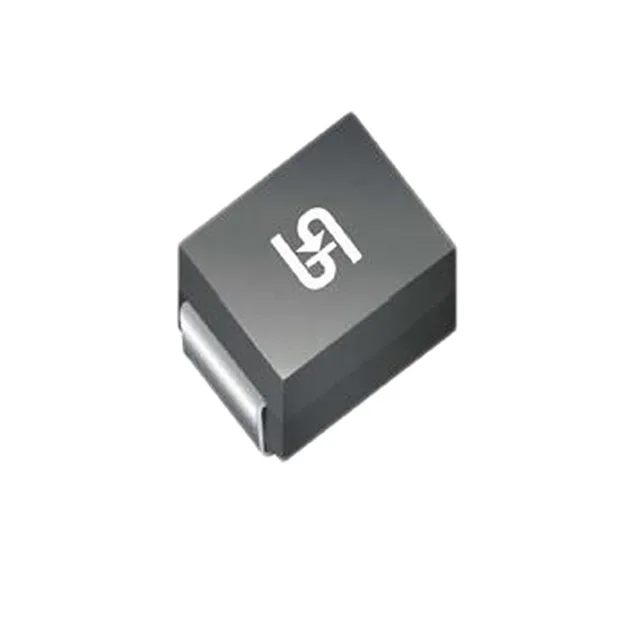
1500W peak pulse — what the clamping spec means
The 1.5SMC75AHR7G: The 64.1 V reverse standoff is the DC working voltage at which the device sits idle in normal operation — above it the TVS clamps, below it the line passes cleanly. For a 12 V rail this gives a comfortable margin: the standoff sits well above the nominal rail and the clamping ceiling clears the withstand rating of most downstream ICs without derating to the point of no protection. A unidirectional TVS of this class clamps positive transients only — the polarity of the protected line must be matched accordingly, since reverse-bias standoff does not apply in the forward direction.
AEC-Q101 grade and the -55 to 150°C window
An engine-bay ECU that sees 125°C ambient still has 25°C of margin to the TJ limit — the same headroom an automotive qualifier targets for a 150,000-hour lifetime without derating below the datasheet curves. The automotive grade also implies tighter screening on Vz drift and leakage current distribution, though the datasheet limits are the binding spec for incoming inspection.
DO-214AB SMC footprint and surface-mount assembly
The DO-214AB (SMC) package is the mid-power TVS footprint — larger than the SMA (DO-214AC) and smaller than the SMB (DO-214AA). The cathode band on the sleeve marks polarity for the unidirectional direction. The exposed pad on the base of the SMC package is the thermal return path — solder paste coverage under the pad is required to hit the thermal resistance values in the datasheet and maintain TJ below the 150°C ceiling under fault surge conditions.