TVS Zener function and peak pulse scale
The 1.5SMC7.5CA M6G is a bidirectional TVS Zener from Taiwan Semiconductor's 1.5SMC family — a transorbs-style clamp designed to absorb transient energy and limit voltage across a protected node.
Standoff, breakdown, and clamping — which rating protects your rail
The reverse standoff voltage of 6.4 V typical is the working DC rail the part sits across without conducting — the protected line runs at or below this value under normal conditions. When a transient drives the line above the 7.13 V minimum breakdown threshold, the Zener avalanches and clamps the voltage to a maximum of 11.3 V at peak pulse current. That 11.3 V clamping ceiling is what the downstream load sees during the event — the tighter the clamp, the better the protection for voltage-sensitive circuits. The base product number 1.5SMC7.5 confirms the 7.5 V nominal Zener voltage; the CA suffix denotes the bidirectional polarity variant, so the part clamps both polarities without requiring two unidirectional devices back-to-back.
SMC package and board assembly context
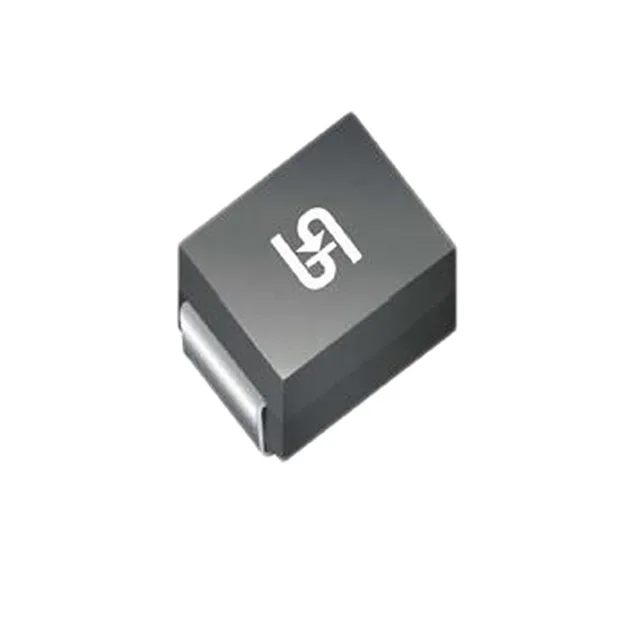
The DO-214AB (SMC) package with surface-mount termination suits pick-and-place assembly at standard SMT speeds. The cathode band on the SMC body marks polarity — on a bidirectional part the band still marks the cathode of the unidirectional reference cell, so orientation matters for the polarity-assignment in the schematic even though the part clamps both directions.
Junction temperature and deployment envelope
Rated to 150 °C maximum junction temperature, the part survives the thermal rise from absorbed surge energy in enclosed or poorly ventilated panels. A 150 °C TJ ceiling means it can sit inside sealed enclosures or near heat sources — an industrial drive cabinet, outdoor cabinet, or junction box — without needing derating at the upper end of the industrial ambient range. Tape-and-reel packaging is the standard format for SMT assembly lines; reel quantities follow the industry standard count, which matters for high-volume panel builds where multiple boards per panel drive the reel-length decision.