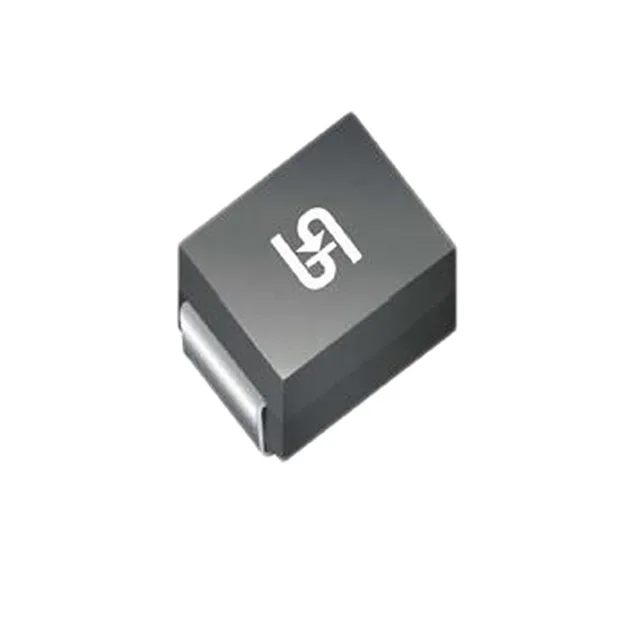
What the voltage ratings mean for protection design
The 1.5SMC7.5AHM6G: The 6.4 V reverse standoff keeps the TVS silent during normal operation — it sits across the line and draws only leakage current until a transient pushes it into breakdown. The 7.13 V minimum breakdown marks the onset of conduction; once the surge pulls the line above that, the diode enters its avalanche region and clamps at 11.3 V maximum. The 11.3 V clamping ceiling is the figure that governs downstream component selection — anything downstream must survive that voltage spike during the event. At 139 A peak pulse (10/1000 µs waveform), the diode handles substantial transient energy before the voltage across it rises to the clamping ceiling. The 1500 W peak pulse power rating is the other axis — both the peak current and the peak power spec must be respected against the actual surge waveform in the application.
AEC-Q101 qualification and automotive deployment context
AEC-Q101 is the automotive discrete semiconductor qualification standard — it covers temperature cycling, humidity bias,ESD robustness, and lifecycle stress testing to levels a commercial TVS does not pass. Unidirectional polarity — it protects a single polarity node. For dual-rail or AC protection the designer routes two diodes or selects the bidirectional variant in the same SMC package. The listed power-line-protection flag being 'No' means it is not characterized for continuous mains-voltage across-line duty; it protects against transients on a powered rail, not as a permanent clamp.