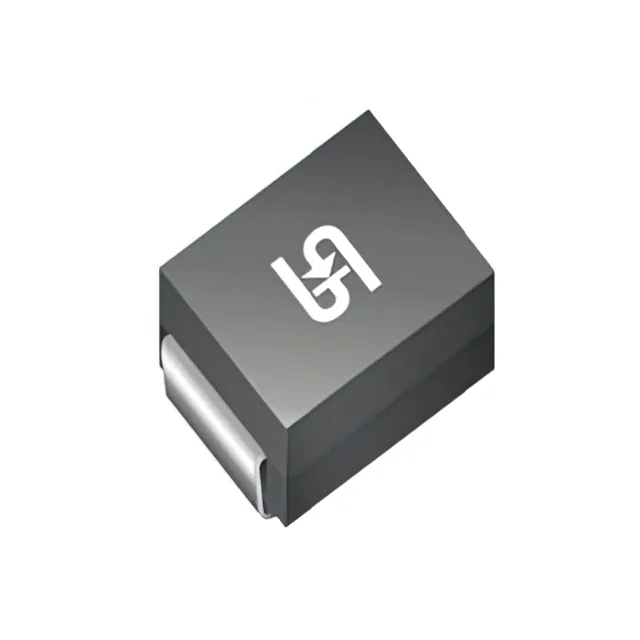
Clamping voltage and what it means for downstream protection
The 1.5SMC68H: The reverse standoff of 55.1 V (typ) is the working voltage the circuit sees under normal conditions — the TVS conducts negligible leakage current here. When a surge drives the line above the 61.2 V breakdown minimum, the device clamps the voltage to 98 V maximum at the rated peak pulse current of 16 A (10/1000 µs waveform). That 98 V ceiling is the clamping level the downstream IC or fet must survive; the 1.5 kW peak pulse rating confirms the diode can absorb the energy of the event without failing short.
Automotive grade and AEC-Q101 qualification
AEC-Q101 is the automotive discrete semiconductor stress qualification — it covers temperature cycling, humidity bias,ESD, mechanical shock, and vibration to the levels a vehicle-grade power node demands. For a telecom line-card application the grade is a proxy for robustness rather than a regulatory requirement, but it means the part has been characterised for the failure mechanisms (hot-carrier degradation, surge fatigue) that kill lesser TVS diodes over time.