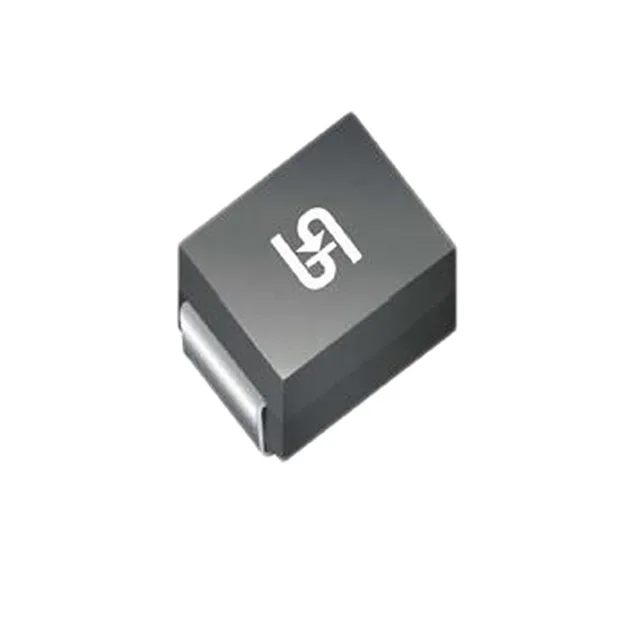
Taiwan Semiconductor Corporation 1.5SMC68CAHM6G — Circuit Protection

1.5SMC68CAHM6G TVS Diode, 58.1V standoff, 1500W peak

MPN1.5SMC68CAHM6G
Active

Taiwan Semiconductor Corporation 1.5SMC68CAHM6G, Zener bidirectional TVS diode, 58.1V standoff, 64.6V min breakdown, 92V clamping @ 17A, 1500W peak pulse, AEC-Q101, DO-214AB SMC, Tape & Reel.

Independent supplier — new & surplus stockAuthenticity-screened · ESD-safe packingListing updated Aug 2026

Specifications

1.5SMC68CAHM6G specifications
ParameterValue
TypeZener
Series1.5SMC
MountingSurface Mount
Voltage - breakdown64.6V
Voltage - clamping (Max) @ ipp92V
Voltage - reverse standoff58.1V
Current - peak pulse (10/1000μs)17A
Power - peak pulse1500W (1.5kW)
Power line protectionNo
Operating temperature-55°C ~ 150°C (TJ)
GradeAutomotive
PackageTape & Reel (TR)
QualificationAEC-Q101
CaseDO-214AB, SMC
Bidirectional channels1

Product details

1.5kW peak pulse protection in an SMC body

The 1.5SMC68CAHM6G: The peak pulse current rating of 17 A at that waveform means the clamping voltage of 92 V max is reached at a surge current the device is rated to survive without degradation.

Three voltage levels — and which one drives the design

Reverse standoff voltage is 58.1 V typical — this is the DC working voltage the protected rail can sit at continuously without the TVS conducting. Breakdown voltage minimum is 64.6 V — the TVS begins to clamp once the surge pushes the rail above this threshold. Clamping voltage maximum is 92 V at the rated 17 A peak pulse current — this is the voltage that appears at the load during a fault event and determines whether downstream circuits survive.

Automotive grade for the full temperature envelope

Junction temperature rating is -55 °C to 150 °C — this covers the engine-bay ambient band where many automotive protection circuits sit, and a 150 °C Tj ceiling gives margin against thermal runaway during repeated surge events. AEC-Q101 qualification means the device has passed the automotive stress suite — humidity, temperature cycling, and surge lifecycle — making it deployable in chassis and powertrain domains without a derating concern.

Active and sourced to order

Tape-and-reel packaging suits high-volume SMT line placement; confirm the MSL rating and dry-storage handling with the supplier before reflow if the reels have been stored long-term.

Frequently asked questions

What is the difference between standoff voltage, breakdown voltage, and clamping voltage on a TVS like 1.5SMC68CAHM6G?

Standoff (58.1 V typical) is the DC working voltage the protected line sits at in normal operation — the TVS stays off. Breakdown (64.6 V min) is where it first begins to conduct during a surge. Clamping (92 V max at 17 A) is the voltage the downstream load actually sees while the TVS is actively shunting fault current — that 92 V figure is the one that determines whether your downstream circuit survives.