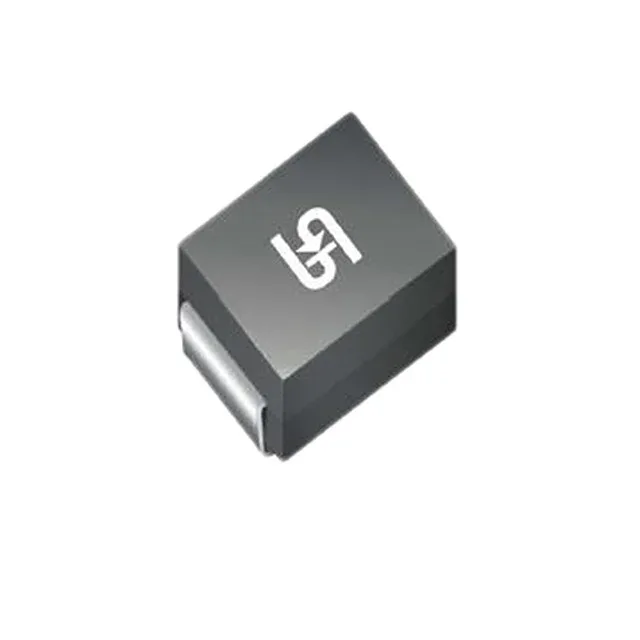
What the 1.5SMC68CA V7G is
The "CA" suffix denotes bidirectional polarity handling, and the base product number 1.5SMC68 positions this as the 68-volt class member of the family — a common working voltage for telecom infrastructure rails and industrial 48V bus protection. The 58.1 V reverse standoff is the working voltage the protected node sees in normal operation; the TVS conducts only when a transient exceeds the 64.6 V minimum breakdown threshold.
Voltage clamping chain and what the ratings mean
In a protection circuit this means the downstream IC or bus sees no more than 92 V during a surge event — the gap between 58.1 V standoff and 92 V clamping is the TVS absorbing the transient energy. At 1.5 kW the clamping energy capacity is adequate for board-level protection on telecom line cards and power-supply input stages where the transient energy is bounded by upstream series impedance.
Telecom deployment and temperature margin
The listed application is telecom, which typically means equipment operating on 48 V or -48 V distribution rails — the 58.1 V standoff fits comfortably above 48 V nominal. Junction temperature rating is -55 °C to 150 °C, giving wide margin for outdoor cabinet or uncontrolled-ambient deployments. Power line protection is listed as "No", confirming this device protects a signal or secondary power rail rather than the AC mains entry point — do not specify it as the primary surge barrier on a power distribution board.