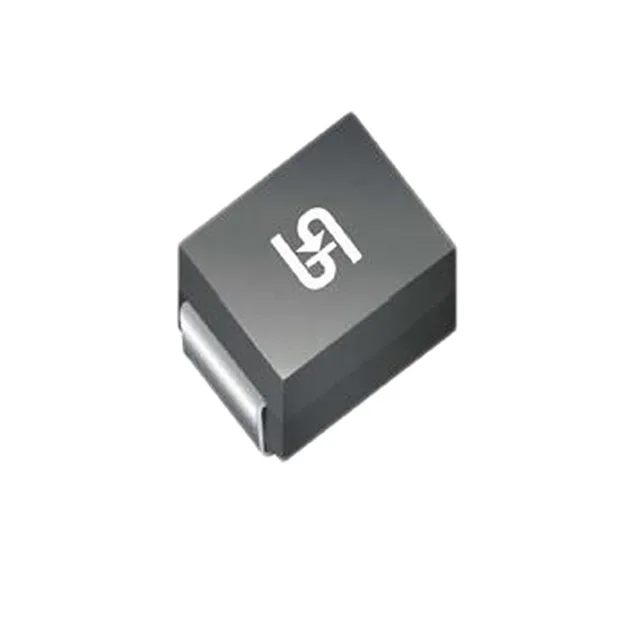
What the 1.5SMC68AHM6G is and where it belongs
AEC-Q101 qualification means it has passed the automotive stress suite: temperature cycling, humidity bias, and peak pulse power at the rated junction temperature of -55°C to 150°C — this is the under-hood temperature band, not the cabin. Unidirectional only, one channel — it clamps positive transients relative to ground and does not reverse-bias protect against negative swings; the reverse-standoff rating of 58.1 V typ sets the continuous working voltage the diode must block in normal operation.
Clamping architecture and what the ratings mean on the board
The breakdown voltage minimum is 64.6 V — above this the TVS avalanche characteristic turns on and shunts the surge current, keeping the clamped node at or below the clamping voltage spec of 92 V max at the 17 A peak pulse rating (10/1000 µs waveform). The 1.5 kW peak pulse rating is a single-event, non-repetitive figure for the 10/1000 µs surge shape; if the board sees repetitive transients (switching, relay kickback) above the rated repetition duty, derate per the power-derating curve or move up to a higher-peak-power series. With a reverse standoff of 58.1 V typ, the diode sits idle on a 48 V nominal rail with margin to spare; the 64.6 V minimum breakdown keeps the rail clean under normal conditions, and the 92 V clamping ceiling protects downstream silicon from transient spikes that would otherwise punch through gate oxides or exceed absolute-maximum ratings.
Sourcing posture and lifecycle
Supplied in Tape & Reel (TR) orientation for automated SMT pick-and-place; the DO-214AB SMC footprint is a widely supported package across the TVS diode market, which simplifies second-source qualification on automotive platforms requiring BOM hedge. No stock-holding claim — a quote clears the channel and lot-traceability requirement before committing.