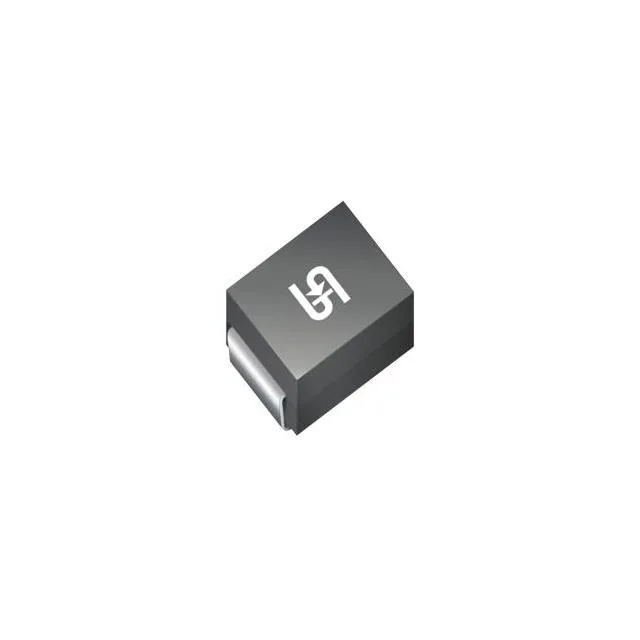
What the 1.5SMC68AH is and what the ratings mean
The 1.5SMC68AH is an AEC-Q101-qualified unidirectional Zener-type TVS diode — it clamps transient voltage spikes on a single polarity rail before they reach downstream circuitry, then returns to high-impedance once the event passes. Operating junction temperature runs to 150 °C, so the part stays inside its rated window even in hot under-hood or outdoor enclosures.
The standoff and clamping window
The reverse standoff of 58.1 V defines the working rail the diode monitors — it sits off-state above that voltage and activates when the line climbs toward the 64.6 V minimum breakdown. This 6.5 V gap between standoff and breakdown is the design margin the circuit needs to run cleanly at nominal rail without the TVS drawing leakage current. The 92 V clamping maximum at 17 A is the peak stress voltage the downstream component sees during a 10/1000 µs surge — choosing a downstream withstand rating above 92 V closes the protection chain. Telecom line cards running 48 V nominal rails commonly use this standoff band for primary protection at the card entry point. One distinction worth flagging: the part is unidirectional, so it protects a single polarity rail only. For bidirectional clamping on an AC signal line or a reversible supply rail, a different TVS topology is required — this part does not provide bidirectional protection even if the clamping voltage rating would superficially fit.
Automotive grade and thermal environment
AEC-Q101 is the automotive stress qualification for discrete semiconductors — it certifies the part has passed humidity, temperature cycling, surge life, and mechanical stress screens at the die and package level. The DO-214AB (SMC) package is the industry-standard high-current TVS outline — the cathode bar at the top of the package is the heat-dissipation path, and board-side copper under the pad directly affects the thermal resistance junction-to-ambient.