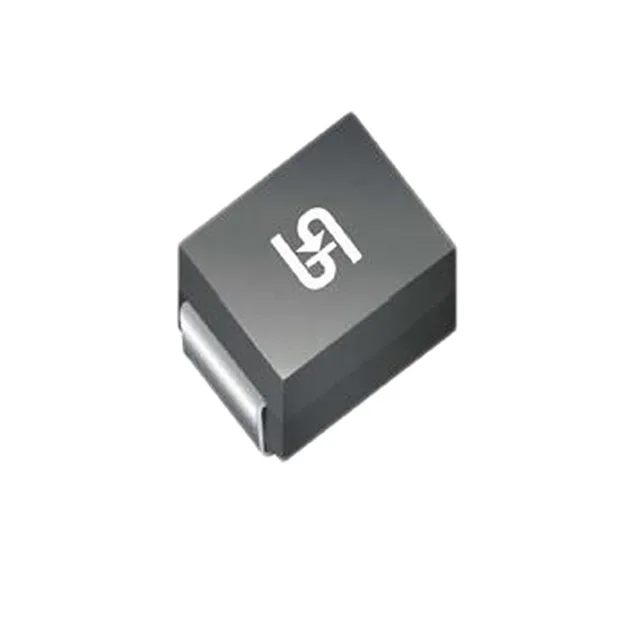
Bidirectional clamping at 53 V standoff — what the 1.5 kW rating means in-circuit
The 1.5SMC62CAHM6G: The 53 V reverse standoff sits well above the 48 V nominal bus common in mild-hybrid and commercial-vehicle systems, leaving margin for the normal operating range without false triggering during cold-crank or start-stop transients. The minimum breakdown of 58.9 V marks the onset of conduction — below that voltage the device holds off and draws only leakage current. For a bidirectional TVS (the "CA" in the order code), this symmetric breakdown applies in both polarities, which matters when protecting AC-coupled signal lines or when the protected node can swing both ways under fault conditions.
Automotive grade and junction temperature margin for under-hood deployment
AEC-Q101 qualification means this part passed the automotive stress suite — including humidity, temperature cycling, and surge testing — so it slots directly into under-hood and body-control modules without requiring additional screening beyond the module-level PPAP. For a 1.5 kW peak-rated device, the PCB copper area under the part is the primary heatsinking path; undersizing it will push the clamping voltage higher under sustained transients as the junction temperature rises. Power Line Protection is listed as "No" — this part is not designed for direct line-to-line AC protection; it is suited for DC rails and signal-line transient suppression in an ECU or module-level protection scheme.