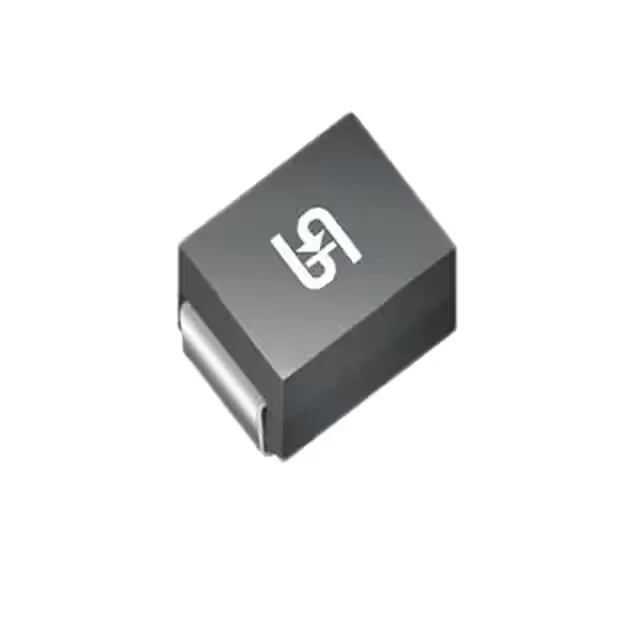
What the 1.5SMC6.8A R7G protects
The 1.5SMC6.8A R7G is a unidirectional Zener-based TVS diode from Taiwan Semiconductor's 1.5SMC series — designed to clamp transient overvoltage on a single signal or DC rail line, not to switch or rectify. The clamping window — roughly 5.8 V standoff up to 10.5 V at peak current — defines what the protected downstream circuit must survive. A downstream IC with an absolute maximum rating of 15 V sits comfortably behind this part; one rated at 8 V or lower will need a lower-standoff TVS or additional series resistance to stay within its limits.
1500 W peak pulse and the 150 °C junction limit
The 150 °C maximum junction temperature (TJ) sets the thermal headroom: at elevated ambient, the derated current capability shrinks, and the board-level thermal path through the SMC package tab to the PCB copper is what actually keeps the junction cool during repeated transients. For a general-purpose board-level protection scenario — no power-line mains, just DC bus or signal rail — the 150 A peak pulse capability is more than adequate for the ESD and inductive kick events typical in industrial and telecom enclosures.
DO-214AB SMC package and Tape & Reel assembly fit
The DO-214AB (SMC) is the standard surface-mount package for 1.5–3 kW TVS diodes — the wide tab under the body gives the die good thermal coupling to the PCB pad, but the thermal land and solder paste coverage on the cathode tab directly govern the real-world junction temperature under surge. Supplied in Tape & Reel (TR) for automated pick-and-place; verify reel count and Orientation with the assembly house before the BOM line is frozen. This is a single unidirectional channel with no power-line protection flag — it sits across one node to ground, protecting a signal line or a DC rail, not across a mains pair. That distinction matters for the topology: power-line TVS parts carry higher isolation and energy ratings suited to AC mains; this part is rated for general-purpose board-level use.