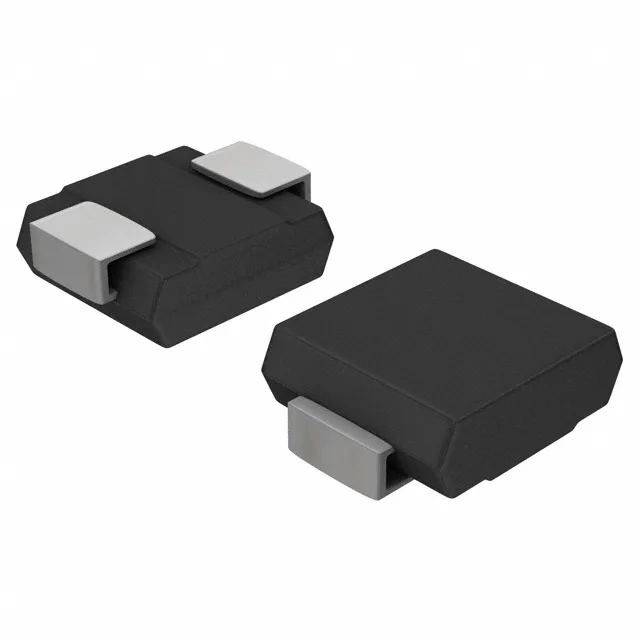
What the clamping ratings mean for the protection circuit
The 1.5SMC56CH: The standoff voltage of 45.4V typ means the line sits below the clamping threshold during normal operation — the TVS presents a high impedance until a transient pushes it into breakdown. When a surge fires, the 80.5V maximum clamping voltage at 19A peak pulse (10/1000µs) clamps the overvoltage before it reaches the downstream circuitry — the 1.5kW peak rating governs the transient energy the device can absorb in that pulse window. The minimum breakdown of 50.4V sits above the standoff, so the device never activates during a 45.4V nominal rail — the 5V margin between standoff and breakdown is the design window the line-card engineer sizes the supply tolerance around.
Automotive grade and thermal envelope
AEC-Q101 qualification means this part passed the automotive discrete semiconductor stress battery: humidity, temperature cycling, surge, and mechanical robustness. Even deployed in telecom, the qualification is a proxy for high reliability under variable operating conditions.
The part is listed Active — it is in standard production with Taiwan Semiconductor Corporation and carries the standard TR tape-and-reel packaging.