What the 47.8V standoff and 1500W peak pulse rating mean
The 1.5SMC56CAHR7G is a unidirectional Zener-based transient voltage suppressor — the 'CA' suffix confirms bidirectional polarity handling, with one bidirectional channel clamping both polarities of the transient. The nominal reverse standoff voltage of 47.8V sets the rail the TVS watches without clamping; when a surge exceeds the breakdown minimum of 53.2V, the device clamps at 77V maximum, limiting what reaches the protected node. The 20A peak pulse current at that same waveform is the current the clamping action conducts at the clamping voltage ceiling; for longer or faster transients the available peak current drops below this figure. Qualified to AEC-Q101, the automotive stress standard for discrete semiconductors — this means it has passed temperature cycling, humidity bias, and surge-life testing at the component level, making it acceptable for under-hood and chassis-domain protection circuits where non-automotive TVS parts carry no design credit.
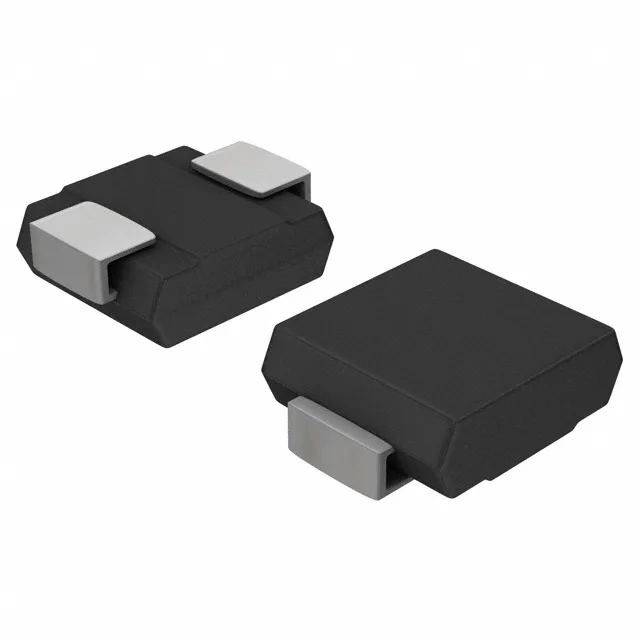
DO-214AB SMC package and automotive temperature range
The DO-214AB (SMC) is the mid-size SMA-body footprint — wider than the SOD-123F used on lower-power TVS parts, with a larger die-attach pad that drives the thermal resistance lower at the 1500W rating. Supplied on Tape & Reel, the 1.5SMC56CAHR7G ships with 3,000 units per reel as standard — the reel format matters for high-volume pick-and-place lines where feeder indexing and component orientation are programmed off the reel pitch. Surface-mount termination is tin-lead solder-plated per the supplier device package designation. Not classified as power-line protection — the TVS is protecting a signal or low-current power rail, not a 120/240VAC mains bus. Confirm the protected rail voltage stays below the 47.8V standoff before committing this part to the BOM; exceeding standoff on a sustained basis degrades the junction.