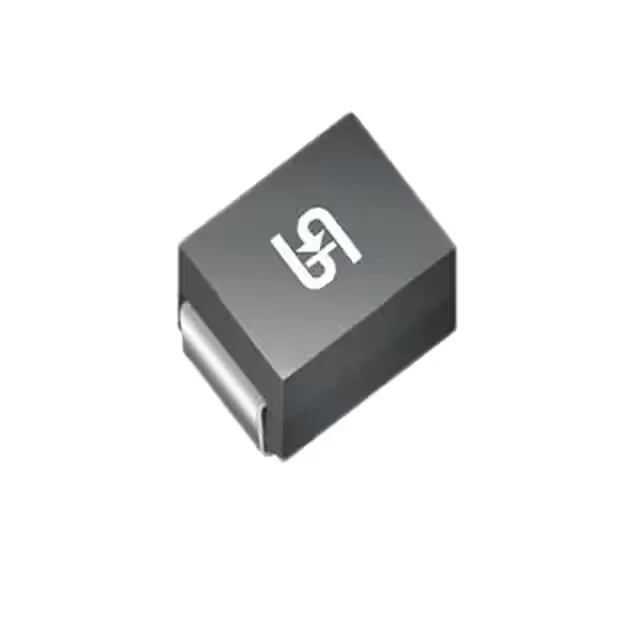
Transient suppression in the SMC package
The 1.5SMC56CA M6G: At 20 A peak pulse current the clamping ceiling sits at 77 V maximum, which means the downstream circuit sees a hard clamp rather than a soft limiting action when a surge hits. For a board carrying 47.8 V nominal rail voltage, a 77 V clamp gives roughly 30 V of headroom above the working rail — enough margin to absorb the bulk of a surge transient without letting the clamping element go into thermal runaway. The reverse standoff of 47.8 V typ marks where the TVS presents a high-impedance leak to the rail under normal operation; it only transitions into conduction when the transient pushes the rail above that threshold. The 53.2 V minimum breakdown is the floor — the device is guaranteed not to clamp below it. For a repair bench tech, this means the part sits quietly across the rail until something external tries to kill it — and then it holds the rail at 77 V or below while absorbing the surge energy.
DO-214AB thermal margin for 1.5 kW pulse duty
Junction temperature is rated to 150 °C maximum. The -55 °C minimum means this part lives in outdoor equipment, industrial controls, and automotive environments where a cold-soak start at temperature extremes is normal before the transient suppressor sees any load.
What the standoff voltage and clamping ratio tell you
A 47.8 V standoff paired with a 77 V maximum clamping voltage gives a tight clamping ratio — lower than many unidirectional TVS parts of equivalent peak power, which matters if your downstream IC has an absolute maximum rating you cannot exceed. The bidirectional configuration is explicitly confirmed: one bidirectional channel means it clamps both polarities without a second part or a bridge arrangement. For an AC line or any bipolar bus, one device covers both halves of the waveform. The base product number 1.5SMC56 maps to the 56 V nominal Zener voltage — the CA suffix confirms the bidirectional polarity grade. Tape & Reel packaging is standard for SMC; confirm the reel quantity and diameter match your pick-and-place tooling before committing to a BOM position.