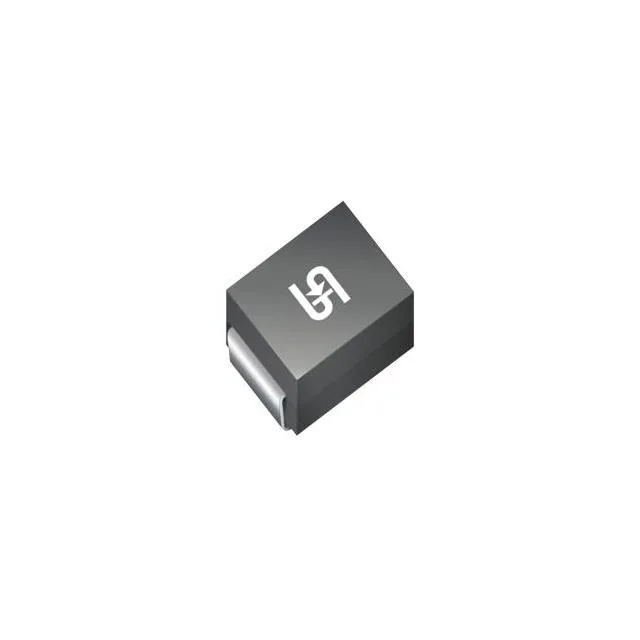
Bidirectional TVS for 28 V rails
The 1.5SMC33CAH: AEC-Q101 qualification means it has passed the automotive-grade reliability screening: high-temperature reverse bias, temperature cycling, and ESD robustness tests required for under-hood and chassis-mounted modules.
Voltage breakdown and clamping margins
Reverse standoff voltage is 28.2 V typical, so the diode stays off below that rail level — no leakage-induced power waste on a 24 V or 28 V bus. Breakdown starts at 31.4 V minimum, giving a 3.2 V guard band before the TVS begins conducting. Maximum clamping voltage of 45.7 V at 34 A peak pulse current sets the voltage the protected IC sees — a downstream 60 V-rated DC-DC converter or 50 V-rated capacitor has enough headroom to survive the clamp. Single bidirectional channel means one device protects a signal pair (e.g., CAN bus lines or a differential data pair) without needing two unidirectional diodes back-to-back — saves board space and reduces part count.
DO-214AB package and thermal handling
Operating junction temperature range of -55°C to 150°C covers the full automotive ambient envelope, including cold-crank at -40°C and under-hood soak at 125°C, with margin for self-heating during repetitive surges. Supplied in Tape & Reel packaging for automated pick-and-place assembly — no manual handling required, which keeps the assembly line ESD-safe and consistent.