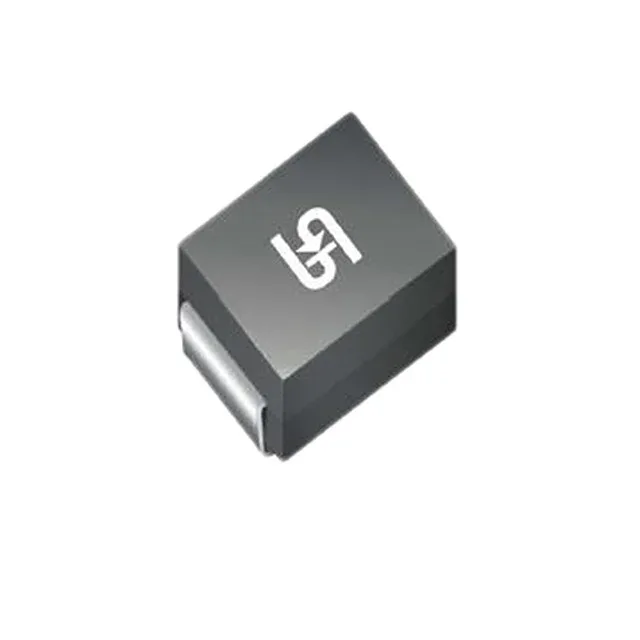
1500W bidirectional TVS for telecom surge protection
The 1.5SMC200CA V7G: This part is designed to clamp transients on telecom and industrial signal lines where the normal operating voltage sits at 171V (reverse standoff) and the device begins conducting at 190V minimum breakdown.
At the 5.7A peak pulse current (Ipp) the clamping voltage reaches 274V maximum. This means the downstream components see no more than 274V across the TVS during a surge event — a figure that determines whether the rail-to-rail voltage rating of the protected ICs has enough margin. Above 190V breakdown it starts to avalanche, shunting the surge current to ground. For a 120V AC telecom line the margin is comfortable; for a 170V DC bus it is at the edge and a higher standoff part may be needed. One channel covers both directions, saving board space versus two unidirectional diodes back-to-back.
Temperature range and package integration
The operating junction temperature range spans -55°C to 150°C, covering outdoor telecom cabinet installations and industrial enclosures without derating concerns. The DO-214AB (SMC) package is a standard surface-mount footprint with a large copper tab on the cathode side — the PCB pad area under that tab sets the thermal resistance for power dissipation during repetitive surge events. Surface-mount assembly with Tape & Reel packaging suits automated pick-and-place lines. The base product number 1.5SMC200 indicates the voltage variant; the V7G suffix denotes the specific packaging and reel configuration from Taiwan Semiconductor.
Active production — sourcing posture
The DO-214AB package is widely second-sourced across the TVS industry, so a pin-compatible alternative from another manufacturer may be cross-referenced for BOM hedging if needed.