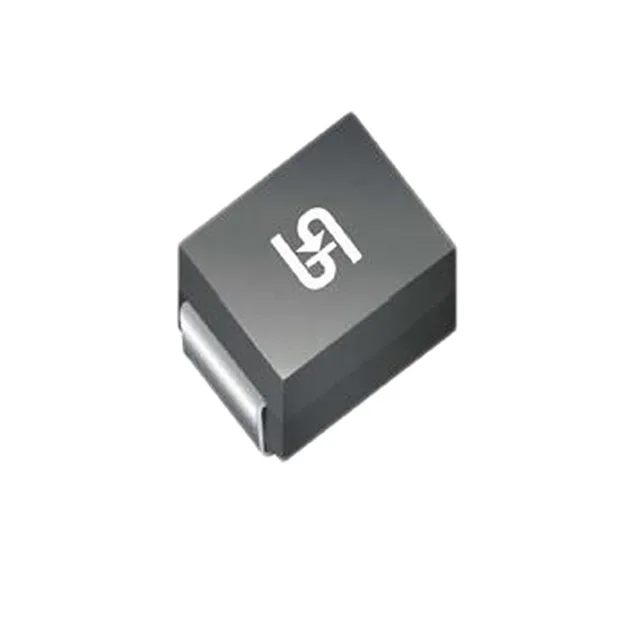
The 1.5SMC200A M6G: If your DC bus runs at 171V and sees lightning or inductive kickback, this part keeps the voltage below the downstream capacitor and IC ratings.
Trigger thresholds and clamping envelope
The reverse standoff voltage is 171V — the rail can sit at this level continuously without the diode leaking appreciably. Breakdown starts at 190V minimum, so the TVS remains off during normal operation and only conducts when a transient pushes the line above that threshold. The clamp voltage is 274V at the rated 5.7A pulse; that 100V window between standoff and clamp defines the protection margin for the load. Mind the dead-time between the transient onset and the clamp engaging — the TVS response is in the picosecond range, so it catches fast edges that a crowbar or MOV would miss. This is a unidirectional device (one channel), meaning it protects against positive transients referenced to ground. For AC lines or bipolar rails, you would need two devices back-to-back or a bidirectional part. The Zener-type construction gives a sharp breakdown knee — the clamp voltage stays tight across the pulse current range, which matters when the protected circuit has a narrow absolute-maximum rating.
Package and board integration
Housed in the standard DO-214AB (SMC) surface-mount package, the 1.5SMC200A M6G fits existing TVS footprints for this power class. The wide-body SMC package handles the 1.5kW pulse without cracking the epoxy — the die attach and leadframe are sized for the thermal shock of repeated surges. The tape-and-reel packaging (TR) suits automated pick-and-place assembly.