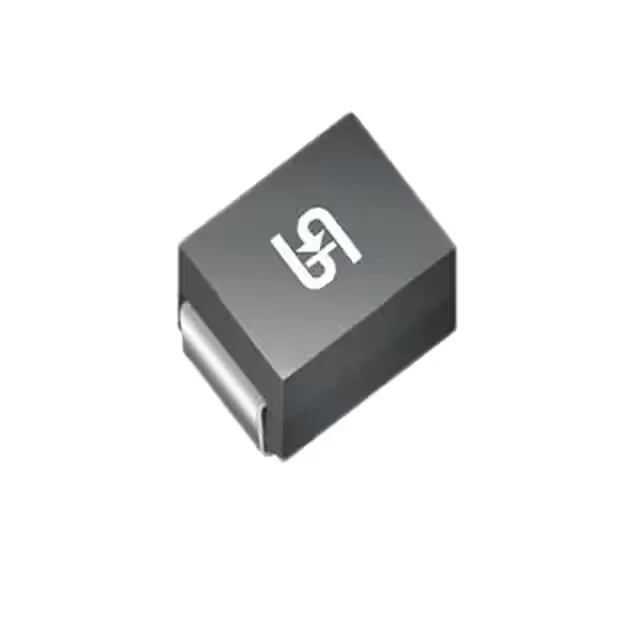
1500W bidirectional TVS, 15.3 V standoff, DO-214AB
The 1.5SMC18CA M6G: It clamps transients at 25.5 V maximum when the surge current reaches 60 A, and its 15.3 V reverse standoff voltage sits below the typical 18 V nominal rail it protects — a 12% margin against continuous DC overvoltage before the device enters breakdown.
Breakdown and clamping — the protection window
Minimum breakdown voltage is 17.1 V, which means the device starts conducting at 17.1 V and fully clamps at 25.5 V under a 60 A peak pulse. The 8.4 V spread between breakdown and clamping defines the energy absorbed as heat in the silicon — a narrower window would reduce the clamping voltage but increase the peak current stress on the downstream load. Operating temperature range spans -55°C to 150°C (junction). The 1500 W rating is derated at high ambient; above 25°C the peak pulse power must be reduced per the thermal derating curve in the datasheet. For a board that sees 85°C ambient, the effective power handling drops to roughly 60% of the 1500 W rating — a consideration for the thermal budget in compact SMC packages. Single bidirectional channel means one device clamps both polarities of a transient — useful on AC signal lines or DC rails where reverse voltage can appear. The DO-214AB (SMC) surface-mount package provides a low-inductance path; the large copper tab area under the cathode (here the die attach) sinks heat into the board copper pour.
Taiwan Semiconductor lists the 1.5SMC18CA M6G as Active. No pin-compatible successor or second-source is required at this lifecycle stage.