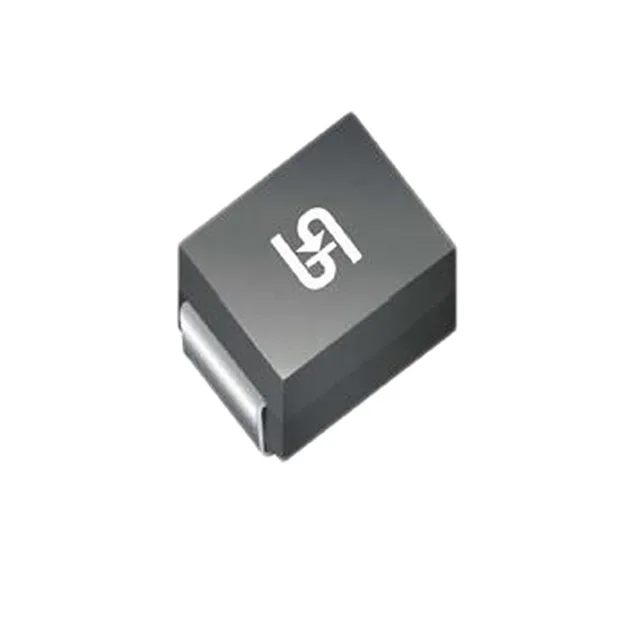
Taiwan Semiconductor Corporation 1.5SMC100AHM6G — Circuit Protection

1.5SMC100AHM6G TVS Diode, 1500W, DO-214AB, AEC-Q101

MPN1.5SMC100AHM6G
Active

Taiwan Semiconductor 1.5SMC series Zener TVS diode, 1.5SMC100AHM6G, 1500W peak pulse power, 85.5V reverse standoff, 137V clamping, DO-214AB SMC, AEC-Q101 automotive grade.

$0.2104Ref. price · indicative, final on quote
Independent supplier — new & surplus stockAuthenticity-screened · ESD-safe packingListing updated Aug 2026

Specifications

1.5SMC100AHM6G specifications
ParameterValue
TypeZener
Series1.5SMC
MountingSurface Mount
Voltage - breakdown95V
Voltage - clamping (Max) @ ipp137V
Voltage - reverse standoff85.5V
Current - peak pulse (10/1000μs)11.4A
Power - peak pulse1500W (1.5kW)
Power line protectionNo
Operating temperature-55°C ~ 150°C (TJ)
GradeAutomotive
PackageTape & Reel (TR)
QualificationAEC-Q101
CaseDO-214AB, SMC
Unidirectional channels1

Product details

The 1.5SMC100AHM6G: That 1500 W rating means it can absorb a single high-energy surge — like an inductive load dump or a lightning-induced transient — without failing short, as long as the pulse stays within the power-time curve. Below that threshold, it draws negligible leakage and does not load the bus. Packaged in a DO-214AB (SMC) surface-mount case, it is a single unidirectional channel — one diode, one direction of protection.

Automotive grade and temperature range

This part carries AEC-Q101 qualification — the automotive discrete semiconductor stress test. The operating junction temperature range is -55°C to 150°C, covering under-hood and engine-bay thermal profiles.

Sourced through independent and authorized distribution channels.

Frequently asked questions

What does the AEC-Q101 qualification mean for this TVS diode?

AEC-Q101 is the automotive-grade qualification standard for discrete semiconductors. It certifies that the part has passed reliability stress tests including high-temperature reverse bias, temperature cycling, and humidity exposure, and that production lots are supported with PPAP documentation. This makes it suitable for automotive electronic systems where field failure is not an option.