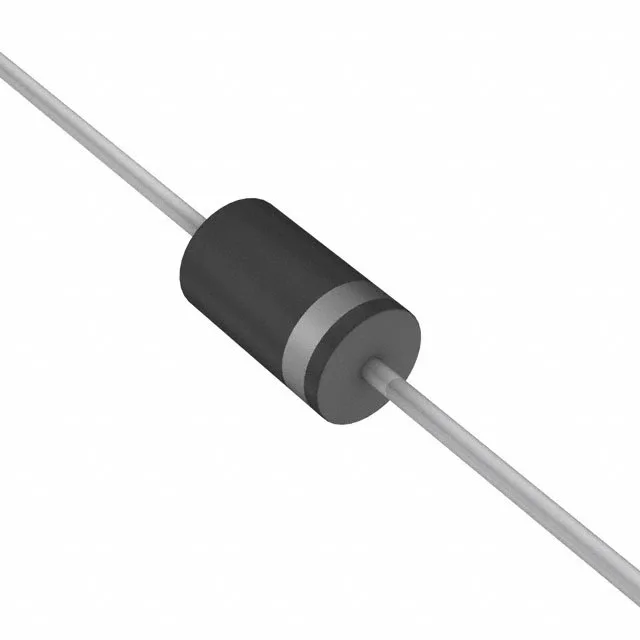
1500W bidirectional TVS in a DO-201 axial body
The 1.5KE30CA A0G: Its 25.6V reverse standoff voltage means it stays transparent on a 24V nominal rail, only clamping when the transient exceeds 28.5V breakdown. The 41.4V clamping limit at 38A peak pulse current defines the voltage the downstream circuitry must survive — a 24V bus with this TVS sees no more than 41.4V across it during a surge.
Clamping voltage and surge current — the real protection envelope
The 41.4V clamping voltage at 38A peak pulse current (10/1000µs waveform) is the hard ceiling for the protected rail. A 24V supply line with this TVS sees the clamp engage at 28.5V minimum breakdown and hold the transient below 41.4V — the downstream regulator or load must tolerate that peak without latching or breakdown. The 1500W rating is the product of clamp voltage and peak current at the test waveform; real-world transients with shorter duration (8/20µs) allow higher peak current before the junction temperature limit is reached. No power line protection is claimed, so this part is intended for secondary signal or low-power bus protection, not mains input.
DO-201 axial package — board-level fit and thermal path
The DO-201AA (DO-27) axial-leaded package is a through-hole body with a 0.052-inch diameter lead. The junction-to-lead thermal path is short — the copper lead frame carries heat out to the PCB trace, so the trace width and copper area under the lead determine the steady-state power dissipation. For repetitive pulse trains, derate the peak power from the 1500W single-pulse rating per the datasheet's pulse derating curve.
Active production — sourcing posture
Taiwan Semiconductor lists the 1.5KE30CA A0G as Active.