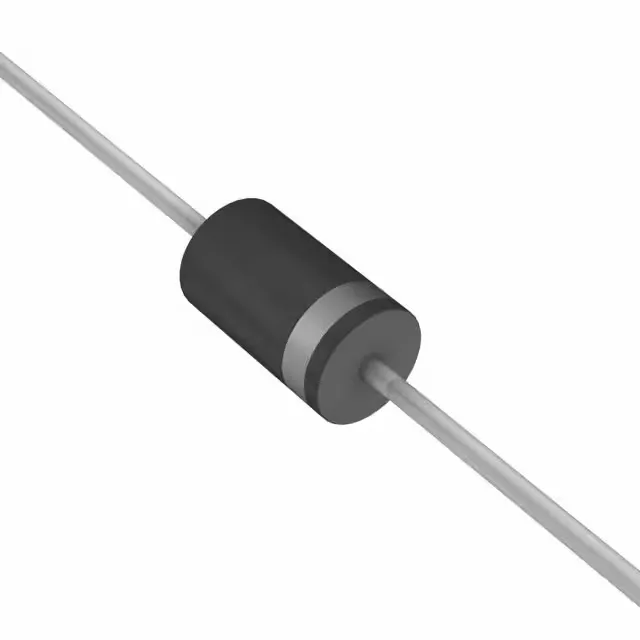
What the clamping numbers mean for your rail
The 1.5KE220CA B0G: The 185 V reverse standoff voltage means it sits across a nominal 185 V DC rail without conducting leakage current under normal operation, then clamps transients at 328 V maximum while shunting 4.8 A of peak pulse current through the junction. The 209 V minimum breakdown voltage is the point where the diode starts to avalanche — between 185 V and 209 V the part is in its high-impedance blocking state. That 24 V window between standoff and breakdown gives headroom for rail ripple without the TVS wearing out from repeated low-energy clamping events.
Thermal and package realities for a through-hole TVS
Power line protection is not listed as a supported application — the 10/1000 µs pulse shape is typical for secondary surge protection on DC buses and signal lines, not for direct AC mains clamping where longer-duration surges would exceed the thermal capacity of the DO-201 package.
Active lifecycle and sourcing posture
Sourced through independent distribution channels against an RFQ.