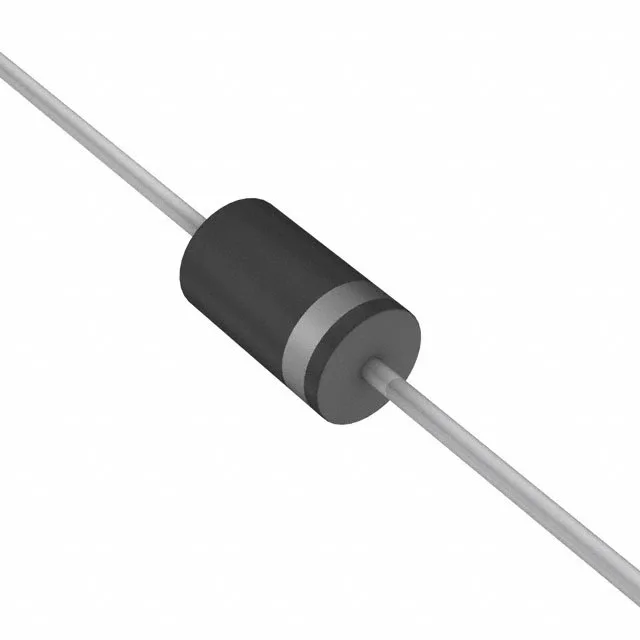
Bidirectional TVS for 154V rails — what the clamp numbers mean on the bench
The 1.5KE180CA R0G: The reverse standoff voltage (154V typ) is the DC or peak-AC voltage the line runs at — the diode stays off below this. When a surge pushes the line past 171V (the minimum breakdown voltage), the device starts conducting and hard-clamps at 246V maximum, shunting 6.4A of peak pulse current (10/1000µs waveform) to ground. That 1500W peak pulse rating is the product of the clamp voltage and the peak current at the specified waveform — it tells you the energy the part can absorb in a single surge without failing short. For a 154V bus (common in three-phase rectified industrial supplies or telecom rectifiers), this part sits between the rail and ground, catching inductive kickback or lightning-induced transients before they reach downstream silicon.
DO-201 axial package — what it means for a rework or repair
The DO-201AA (DO-27) axial-lead package is a through-hole form factor rated for the full 1500W pulse. On a repair bench, this is a straightforward swap — the leads are 0.042-inch diameter tin-plated copper, and the body sits about 9 mm long. The through-hole mount means it handles the thermal shock of a soldering iron or a hot-air rework station without the pad-lift risk a small SMD package would see under the same pulse energy. The wide Tj range means no derating concern for most industrial environments — the 1500W rating holds across the full temperature band, unlike some TVS parts that lose pulse capability above 125°C.
If your line uses axial tape feeders, this is the reeled variant; bulk or ammo-pack versions of the same die exist under different suffixes.