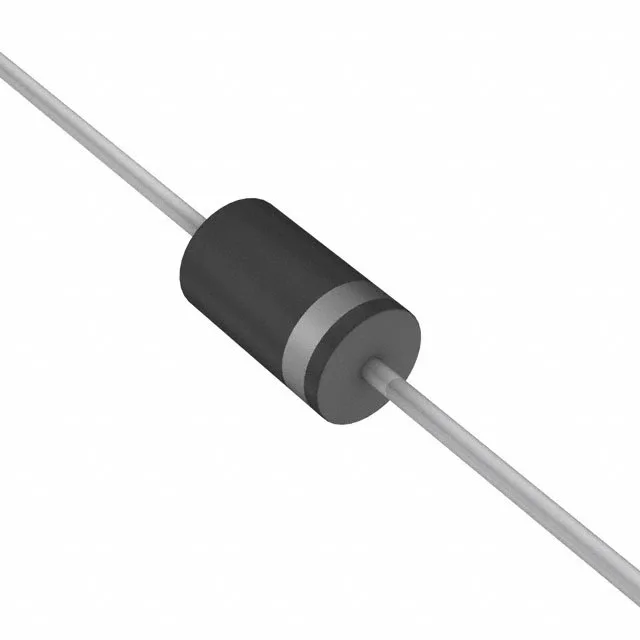
What the 1500W rating means for your protection design
The 1.5KE150CA B0G: That 1500W figure is the energy it absorbs in a single surge event — above that, the junction fails short. The 128V reverse standoff is the DC working voltage where the diode is effectively off. The breakdown range starts at 143V minimum, meaning the device begins conducting between 143V and the clamping limit. This window — 128V standoff to 207V clamp — defines the protection envelope for a 120V nominal rail or signal line.
Package and rework reality — DO-201 axial
DO-201AA (also DO-27) axial leaded package — through-hole, not surface mount. That means it survives hot air just fine; the leads take the heat before the body. Pin 1 is the cathode band on the body, but since this is a bidirectional device, polarity doesn't matter for installation — it clamps both directions. The axial leads bend to fit the board; keep the bend radius generous to avoid cracking the glass passivation at the lead exit. No moisture sensitivity level to worry about with an axial leaded part; it ships in bulk tube or ammo pack.
Sourcing and lifecycle — active production, no obsolescence worry
No power line protection rating means this is intended for secondary-side transient suppression on DC rails or signal lines, not for AC mains input protection. The bidirectional channel covers both positive and negative transients in a single device, saving board space over two unidirectional diodes back-to-back.