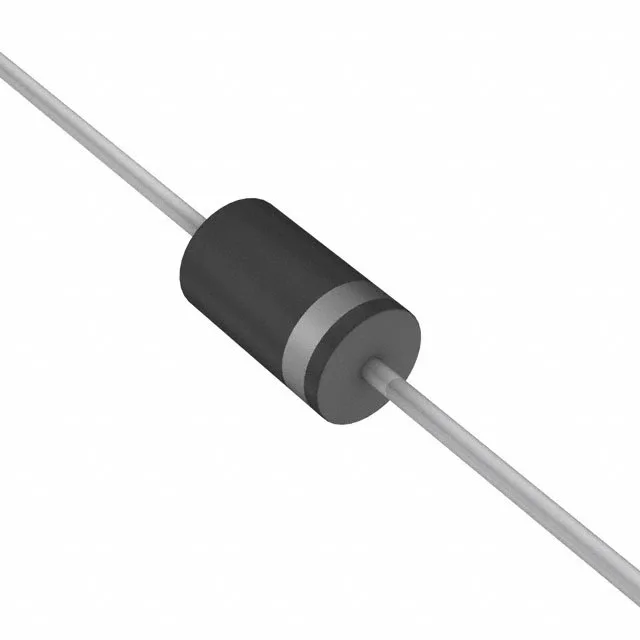
AEC-Q101 transient suppressor for 12V automotive rails
The 1.5KE11CAHB0G: With a 9.4V reverse standoff voltage and a 10.5V minimum breakdown, it clamps transients at 15.6V max — a fit for 12V nominal automotive power buses where load-dump and inductive spikes need a hard voltage ceiling.
Clamping voltage and pulse current — what the ratings mean for the BOM
The 15.6V clamping voltage at 100A peak pulse current (10/1000µs) defines the maximum voltage the downstream circuitry sees during a surge event. A 12V ECU input protected by this diode sees the rail held below 16V even during a 100A pulse — well within the typical 36V abs-max of automotive-rated downstream ICs. The 1.5kW peak pulse power rating means the device absorbs a single 10/1000µs surge up to that energy without failing short. In a 12V system with a 0.5Ω source impedance, the available surge energy at 100A is well under 1.5kW, leaving margin for repetitive transients. AEC-Q101 qualification certifies the device for automotive stress levels: temperature cycling, high-temperature reverse bias, and ESD robustness per the automotive discrete semiconductor reliability standard.
Package and board-fit — DO-201 axial footprint
The DO-201AA (DO-27) axial-lead package is a through-hole form factor with 0.052-inch diameter leads. The body length is 9.1mm typical; the anode/cathode banding marks the bidirectional orientation — either lead can be the reference. The axial lead spacing fits standard 0.4-inch hole centers on a prototype board or production PCB.
Sourcing posture — active production, quoted per RFQ
It is sourced through authorized and independent distribution channels; pricing and lead time are confirmed at quote against the BOM quantity.