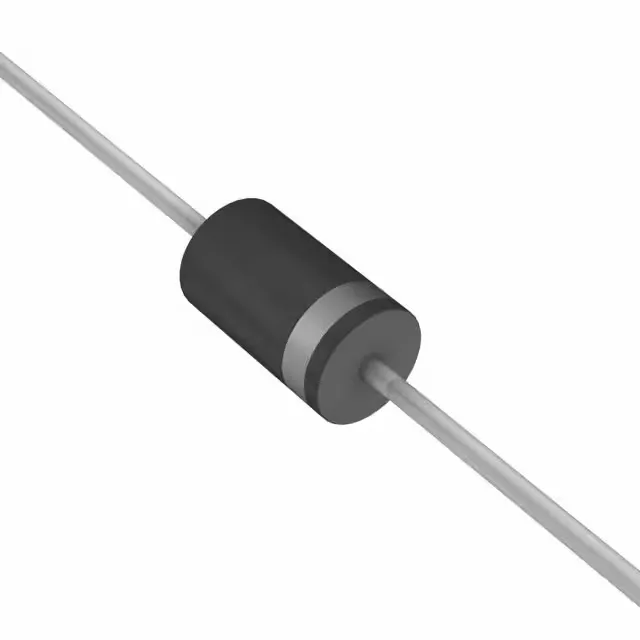
1500 W peak pulse, 9.4 V standoff — the clamping decision
The 1.5KE11A A0G: The 10.5 V minimum breakdown voltage sits between the standoff and clamp, ensuring the diode does not trigger on normal rail ripple but responds before the transient exceeds the downstream device's absolute maximum rating.
Active production, through-hole DO-201AA
The DO-201AA axial-lead package is a standard through-hole form factor, compatible with existing PCB layouts for the 1.5KE family.
General-purpose transient suppression — what the ratings mean for the BOM
The 9.4 V standoff suits 5 V, 9 V, and 12 V DC rails where the nominal supply plus tolerance stays below 9.4 V. The 15.6 V clamp limits the voltage seen by the protected IC during a surge — a 12 V-rated capacitor or regulator sees a transient clamped 3.6 V above its rail, well within typical 20% margin. Peak pulse current of 100 A at the 10/1000 µs waveform means the diode can absorb a direct lightning-induced surge on a cable entry or an inductive load dump without failing short. The 1500 W peak pulse power is the energy-handling ceiling for a single pulse; repetitive events require derating per the manufacturer's pulse derating curve.