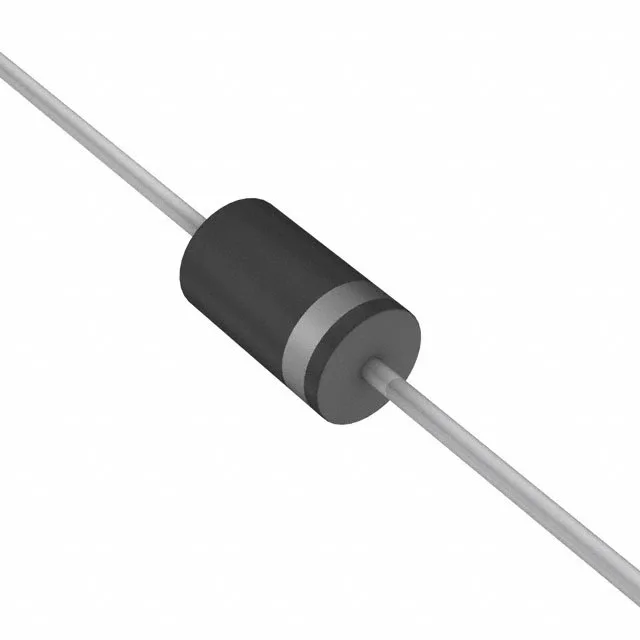
Active production, AEC-Q101 qualified — the sourcing reality
The 1.5KE10AHA0G: The AEC-Q101 qualification is the automotive-grade screening: it passes the full suite of reliability stress tests (HTRB, H3TRB, temperature cycling, and ESD) required for under-hood and chassis-mounted electronics.
Protection window — what the voltage ratings mean for the BOM line
The reverse standoff voltage is 8.55V — this is the maximum continuous DC voltage the TVS can sit across without conducting. The breakdown voltage range starts at 9.5V, so the rail must stay below 8.55V during normal operation. That 14.5V clamp is the voltage the downstream IC sees — it must stay below the abs-max rating of the protected device.
Package and board-fit — through-hole, not reflow
The DO-201AA / DO-27 axial package is a through-hole part, not a surface-mount reflow component. The leads are formed and inserted into plated-through holes — the rework tech needs a soldering iron or wave solder, not a hot-air rework station. The supplier device package is DO-201, which is the standard JEDEC outline for this power class.
Unidirectional Zener — one channel, one direction
This is a unidirectional TVS with one channel — it clamps positive transients relative to ground. For bidirectional protection (e.g., on an AC line or a signal that swings below ground), you need two devices back-to-back or a bidirectional part. The power line protection flag is No, so this is designed for DC rail protection, not for AC mains.