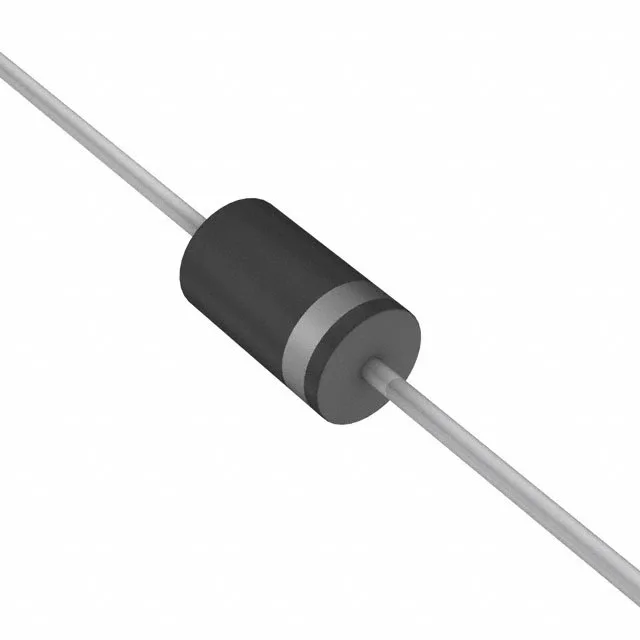
Taiwan Semiconductor Corporation 1.5KE10A A0G — Circuit Protection

1.5KE10A A0G TVS Diode, 1500W, 8.55V Standoff, DO-201

MPN1.5KE10A A0G
Active

Taiwan Semiconductor 1.5KE10A A0G, Zener TVS diode, 1500W peak pulse power, 8.55V reverse standoff, 14.5V clamping, DO-201AA axial through-hole, single unidirectional channel.

Independent supplier — new & surplus stockAuthenticity-screened · ESD-safe packingListing updated Aug 2026

Specifications

1.5KE10A A0G specifications
ParameterValue
TypeZener
Series1.5KE
MountingThrough Hole
Voltage - breakdown9.5V
Voltage - clamping (Max) @ ipp14.5V
Voltage - reverse standoff8.55V
Current - peak pulse (10/1000μs)108A
Power - peak pulse1500W (1.5kW)
Power line protectionNo
Operating temperature-55°C ~ 175°C (TJ)
PackageTape & Box (TB)
ApplicationsGeneral Purpose
CaseDO-201AA, DO-27, Axial
Unidirectional channels1

Product details

1500 W peak pulse in a DO-201 axial body

The 1.5KE10A A0G: This is a single-channel device designed to clamp transients on general-purpose DC rails or signal lines that see repetitive surge events.

Clamping voltage and standoff margin

The reverse standoff voltage is 8.55 V typical, meaning the device draws negligible leakage current on a rail up to that level. Breakdown occurs at a minimum of 9.5 V, and the clamping voltage peaks at 14.5 V when the surge current hits 108 A. That 14.5 V ceiling determines whether the downstream silicon survives a lightning or inductive kick transient.

Active production and sourcing posture

Taiwan Semiconductor lists the 1.5KE10A A0G as Active in the product lifecycle.

Frequently asked questions

What is the peak pulse current rating of 1.5KE10A A0G?

The peak pulse current (Ipp) for the 1.5KE10A A0G is 108 A under a 10/1000 µs waveform. This is the maximum surge current the device can clamp before exceeding its 1500 W power rating.

Is 1.5KE10A A0G suitable for power-line protection?

No. The evidence indicates Power Line Protection is not supported, meaning this device is intended for secondary-side or signal-line transient suppression, not for direct AC mains or high-energy power-entry clamping.