1500 W peak pulse — what the 10/1000 µs rating means for the rail
The 1.5KE100A R0G: That power rating is the product of the clamp voltage and the peak current at the test pulse — at the 137 V clamp, the diode handles 11.4 A before the waveform decays. The 85.5 V reverse standoff voltage is the DC or peak-AC line voltage the diode sits across without conducting appreciable leakage. The 95 V minimum breakdown voltage is where the avalanche triggers — the rail must stay below 85.5 V in normal operation, and the transient must exceed 95 V to engage the clamp.
Clamp voltage and peak current — the protection envelope
At the 11.4 A peak pulse current (10/1000 µs), the voltage is clamped to 137 V maximum. The 1500 W rating is the energy-handling limit at that pulse width; shorter pulses allow higher peak current, longer pulses require derating. This part has no power line protection (the spec explicitly says Power Line Protection: No), meaning it is intended for signal or low-voltage DC rail transient suppression, not for AC mains primary protection where repetitive surge and overvoltage coordination standards apply.
DO-201 axial package — board integration
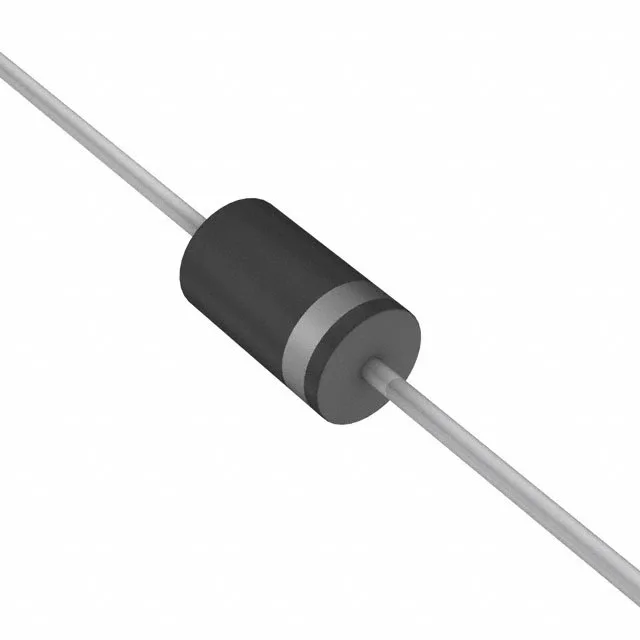
Housed in a DO-201AA (DO-27) axial-lead through-hole package, the 1.5KE100A R0G mounts into a 1.1 mm diameter hole on a standard PCB or terminal block. The axial leads carry the full surge current; the body is the junction. The operating junction temperature range is -55°C to 175°C, covering industrial and military-grade environments. Supplied in tape and reel (TR) packaging for automated insertion, though the through-hole format also suits hand-assembly and rework in prototyping or low-volume production.
Active production — no obsolescence concern
As a general-purpose TVS diode, it is widely second-sourced across the industry. The 1.5KE series is a JEDEC-registered outline; functionally equivalent parts from other manufacturers with the same 1.5KE100A marking are pin-compatible drop-in replacements, though always confirm the specific clamp voltage and peak current ratings against the BOM requirement.