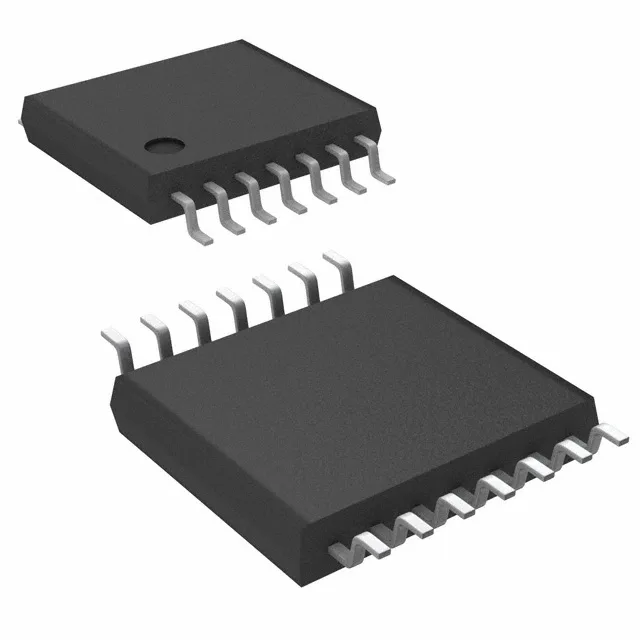
STMicroelectronics TSX564AIYPT — Analog & Data Acquisition

ST TSX564AIYPT Automotive CMOS Op-Amp, 900 kHz, 14-TSSOP

MPNTSX564AIYPT
End of Life

ST TSX564AIYPT, Automotive CMOS quad op-amp, 900 kHz gain bandwidth, 1.1 V/µs slew rate, rail-to-rail output, 3 V to 16 V supply, 250 µA per channel, -40°C to 125°C, 14-TSSOP package, AEC-Q100 qualified.

$3.06Ref. price · indicative, final on quote
Packaging14-TSSOP (0.173", 4.40mm Width)
RoHSROHS3 Compliant
Independent supplier — new & surplus stockAuthenticity-screened · ESD-safe packingListing updated Aug 2026

Specifications

TSX564AIYPT specifications
ParameterValue
Output typeRail-to-Rail
MountingSurface Mount
Amplifier typeCMOS
Voltage - input offset600 µV
Voltage - supply span16 V
Current - supply250µA
Current - input bias1 pA
Current - output (Channel)92 mA
Operating temperature-40°C ~ 125°C
Gain bandwidth product900 kHz
GradeAutomotive
PackageTape & Reel (TR); Cut Tape (CT)
Slew rate1.1V/µs
QualificationAEC-Q100
Case14-TSSOP (0.173\", 4.40mm Width)
Number of circuits4

Product details

250 µA per channel — the power budget angle

Each of the four amplifiers draws 250 µA of supply current, keeping the total quiescent draw under 1 mA for the package. That matters for always-on ECU modules, battery-backed sensor nodes, or any rail where thermal budget is tight. The 92 mA output current per channel gives enough drive for small relays, LEDs, or the input of a downstream ADC reference buffer.

1 pA input bias — why it simplifies the front end

CMOS inputs with 1 pA typical bias current let you use high-impedance dividers or piezo sensors without a separate buffer stage.

14-TSSOP — footprint and supply-chain fit

No end-of-life notices or last-time-buy windows are in effect.

Frequently asked questions

Is TSX564AIYPT suitable for automotive use?

It is designed for under-hood, cabin, and chassis-domain automotive electronics.

Does TSX564AIYPT support a 3.3V single supply?

Yes, the supply span runs from 3 V to 16 V, so a 3.3 V single supply is well within range. The rail-to-rail output swings close to both rails, making it compatible with 3.3 V ADCs and logic inputs.