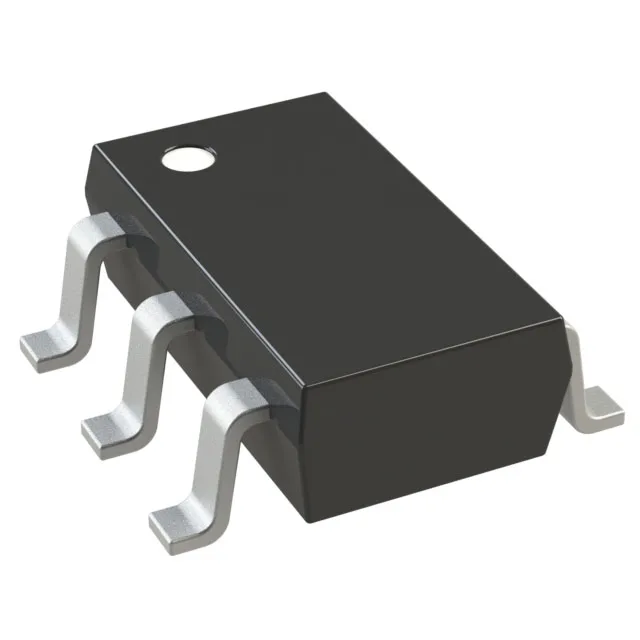
STMicroelectronics TSV851ILT — Analog & Data Acquisition

STMicroelectronics TSV851ILT general-purpose op-amp, 1.3 MHz

MPNTSV851ILT
End of Life

STMicroelectronics TSV851ILT, single general-purpose op-amp, 1.3 MHz gain bandwidth, 0.7 V/µs slew rate, rail-to-rail output, 130 µA supply, SC-74A/SOT-753, -40 to 125°C.

$1.41Ref. price · indicative, final on quote
PackagingSC-74A, SOT-753
RoHSROHS3 Compliant
Independent supplier — new & surplus stockAuthenticity-screened · ESD-safe packingListing updated Aug 2026

Specifications

TSV851ILT specifications
ParameterValue
Output typeRail-to-Rail
MountingSurface Mount
Amplifier typeGeneral Purpose
Voltage - input offset4 mV
Voltage - supply span5.5 V
Current - supply130µA
Current - input bias27 nA
Current - output (Channel)70 mA
Operating temperature-40°C ~ 125°C
Gain bandwidth product1.3 MHz
PackageTape & Reel (TR); Cut Tape (CT)
Slew rate0.7V/µs
CaseSC-74A, SOT-753
Number of circuits1

Product details

Supply current is 130 µA typical, so this part fits into battery-powered or loop-powered designs where every microamp counts.

No end-of-life notice, no last-time-buy deadline. If you need a dual-channel version in the same family, the TSV852IDT is the two-channel sibling — same 1.3 MHz GBW, same 0.7 V/µs slew rate, same rail-to-rail output, same temperature range, but in a different package and with two amplifiers per chip.

The input bias current is 27 nA. Output current capability is 70 mA per channel.

Frequently asked questions

Is TSV851ILT obsolete or end-of-life?

No — the TSV851ILT is listed as Active with no end-of-life notice. It is safe to specify into new designs.

What is the TSV851ILT equivalent or replacement?

The TSV852IDT is the dual-channel sibling in the same family — same 1.3 MHz GBW, same slew rate, same rail-to-rail output, same temperature range. If you need a single-channel part with higher bandwidth, the TS921IDT offers 4 MHz GBW and 1.3 V/µs slew rate.

What is the TSV851ILT's listed slew rate?

The slew rate is 0.7 V/µs. That is enough for signals up to a few hundred kHz at full output swing — adequate for audio, sensor conditioning, and slow control loops.