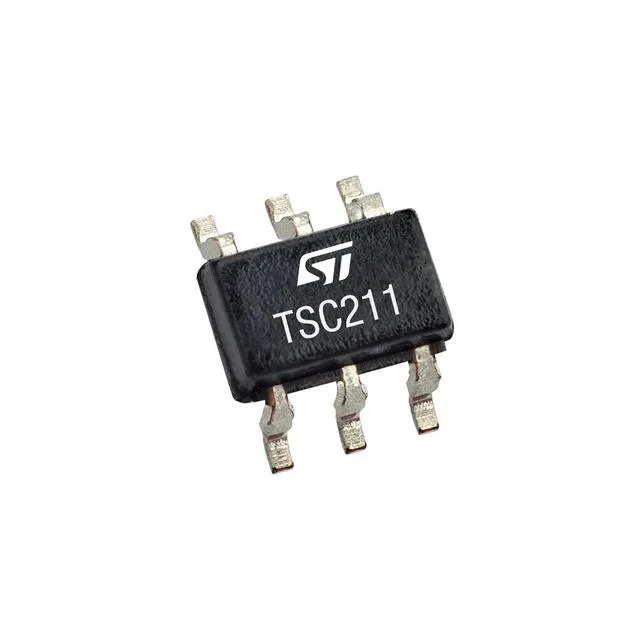
STMicroelectronics TSC211IYCT — Analog & Data Acquisition

STMicroelectronics TSC211IYCT Current Sense Amplifier

MPNTSC211IYCT
End of Life

STMicroelectronics TSC211IYCT, Current Sense Amplifier, 1 Circuit, Push-Pull Output, SC-70-6, 8 kHz GBP, 65 µA Supply, -40°C to 125°C.

$2.47Ref. price · indicative, final on quote
Packaging6-TSSOP, SC-88, SOT-363
RoHSROHS3 Compliant
Independent supplier — new & surplus stockAuthenticity-screened · ESD-safe packingListing updated Aug 2026

Specifications

TSC211IYCT specifications
ParameterValue
Output typePush-Pull
MountingSurface Mount
Amplifier typeCurrent Sense
Voltage - input offset35 µV
Voltage - supply span2.7 V
Current - supply65µA
Current - input bias28 µA
Operating temperature-40°C ~ 125°C (TA)
Gain bandwidth product8 kHz
PackageTape & Reel (TR); Cut Tape (CT)
Slew rate0.075V/µs
Case6-TSSOP, SC-88, SOT-363
Number of circuits1

Product details

The STMicroelectronics TSC211IYCT is a single-channel current sense amplifier in a SC-70-6 package. It is designed for low-side current measurement where the sense resistor sits between the load and ground, converting a small differential voltage into a push-pull output referenced to the supply rail.

The 8 kHz gain-bandwidth product sets the usable bandwidth for the current-sense signal. The 0.075 V/µs slew rate and 8 kHz GBP mean the output settles in the tens-of-microseconds range.

Supply range and quiescent current

The 65 µA quiescent current is the draw of the amplifier itself.

There is no LTB notice or successor part on record. The TSC212ICT is a pin-compatible current sense amplifier from the same family with a higher slew rate (0.5 V/µs) and a wider bandwidth.

Frequently asked questions

What is the closest functional second-source for TSC211IYCT?

The TSC212ICT is a pin-compatible current sense amplifier from the same STMicroelectronics family. It offers a higher slew rate of 0.5 V/µs and a wider bandwidth, but shares the same SC-70-6 footprint and supply voltage range. Verify the input offset and bias current against your design before substituting.