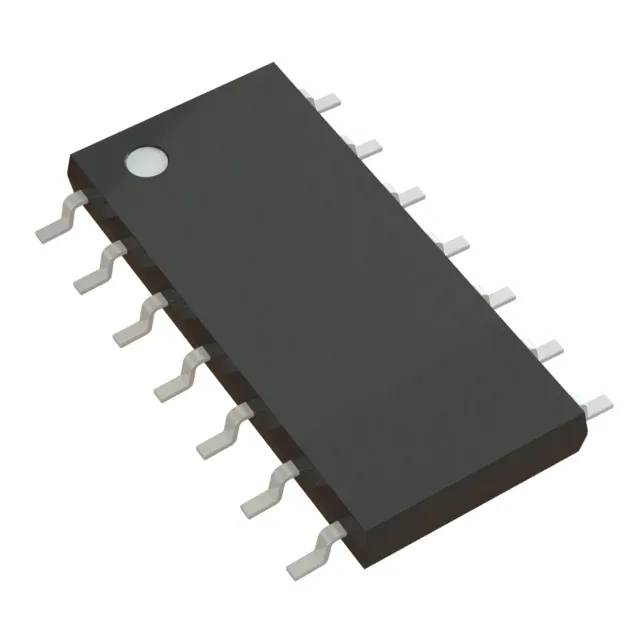
Each channel draws 1.4 mA supply current, making it a fit for multi-channel signal conditioning where power per channel matters. The AEC-Q100 qualification signals it was characterised for automotive-grade reliability, though the 0°C~70°C commercial temperature range limits deployment to cabin or indoor environments — not under-hood.
A 16 V/µs slew rate means this op-amp can swing a 10 V peak-to-peak output at roughly 250 kHz without slewing into distortion. For audio line-level signals or sensor outputs below 100 kHz, the slew rate is generous; for higher-speed ADC drivers or video buffers, it runs out of steam. The 40 mA output current per channel can drive a modest load — think 600 Ω headphones or a 10-bit SAR ADC input — without an external buffer.
JFET input — 20 pA bias current, 3 mV offset
That matters when the source impedance is high, like a photodiode or a pH probe. The 3 mV input offset voltage is typical for a general-purpose JFET part; if your application needs sub-mV precision, you would reach for an auto-zero or precision bipolar amplifier instead.