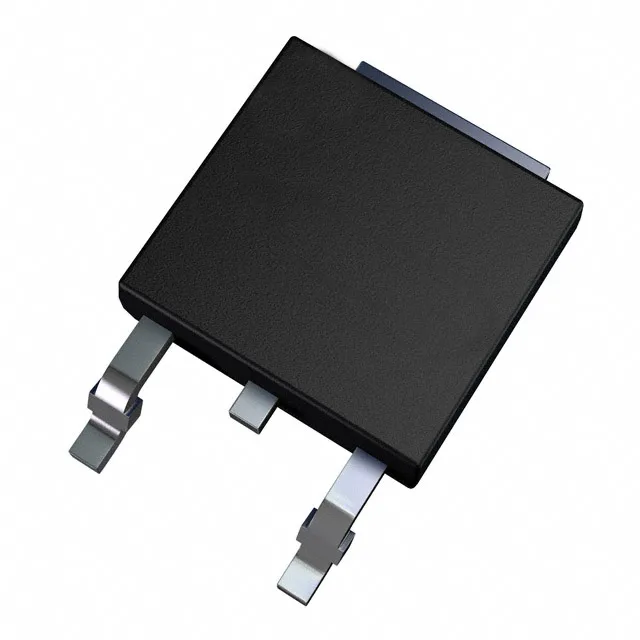
1200 V SiC Schottky — why zero recovery matters
The STPSC2H12B-TR1 is a 1200 V, 5 A silicon-carbide Schottky diode from STMicroelectronics in a DPAK surface-mount package. Its defining characteristic is zero reverse recovery time — the SiC Schottky barrier eliminates the stored-charge tail that forces silicon ultrafast diodes into a recovery loss spike at every switching edge. For a 1200 V device, that means the diode contributes essentially no switching loss in a hard-switched PFC, boost, or LLC stage, letting the designer push frequency higher or shrink the magnetics.
175°C junction — where it runs
The 190 pF capacitance at 0 V and 1 MHz is typical for a 5 A SiC part; it does not ring excessively in a half-bridge node if the layout keeps the loop tight.
ST lists the STPSC2H12B-TR1 as obsolete.
Forward drop and leakage at 1200 V
The maximum forward voltage is 1.5 V at 2 A — a typical figure for a 1200 V SiC Schottky at that current density. Reverse leakage is 12 µA at the full 1200 V rating, which is low enough that self-heating from leakage at high bus voltage is negligible in most designs. These numbers matter when you are doing the thermal derating: the 1.5 V drop at 2 A times duty cycle is the conduction loss; the zero recovery is the switching loss. Together they let you size the heatsink for a 5 A average load without the recovery spike margin that a silicon diode would demand.