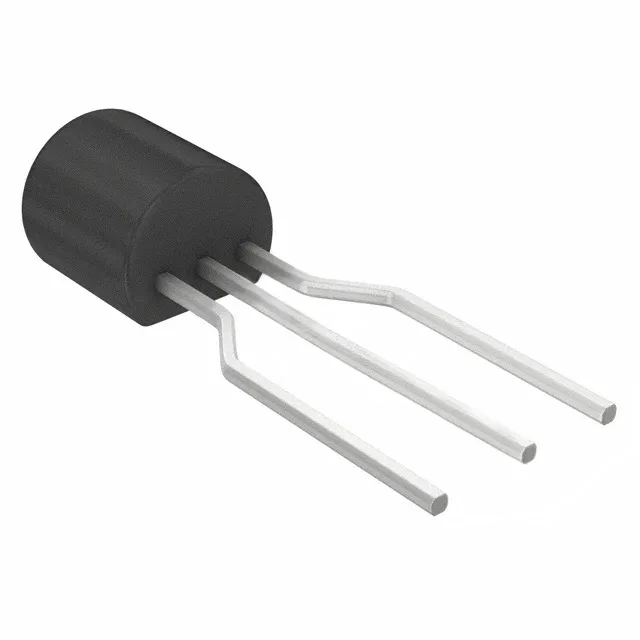
The STPSA42-AP is an NPN bipolar transistor from STMicroelectronics rated for a 300 V collector-emitter breakdown (Vceo) and 500 mA continuous collector current, packaged in a TO-92AP through-hole case. With a 50 MHz transition frequency and 625 mW maximum power dissipation, it sits in the medium-voltage, moderate-current class used for line-powered driver stages — think relay and solenoid drivers in industrial controls, auxiliary supply switches in telecom line cards, or high-side pre-drivers in offline power converters where the rail sits above 48 V. The 300 V breakdown means it handles rectified 240 VAC bus voltages with margin, but the 500 mA Ic and 625 mW Pd limit it to light loads — a small relay coil or an optocoupler LED, not a motor contactor.
Obsolete — sourcing from independent distribution
For BOM lines that still reference this part, the supply channel shifts to independent distribution — surplus inventory, new-old-stock, or verified broker lots.
Key ratings and the decisions they drive
The 300 V Vceo is the part's defining spec — it is not a 40 V or 80 V general-purpose NPN. That rating suits it for circuits where the collector rail is 120 VAC rectified (≈170 VDC) or 240 VAC rectified (≈340 VDC), with derating. The 500 mA Ic maximum means the load current should stay well under that — a 100 mA relay coil or a 50 mA solenoid is comfortable, but a 400 mA continuous load pushes the junction temperature hard given the 625 mW package limit. The DC current gain (hFE) is specified at 40 minimum at 30 mA, 10 V — that is modest gain, so the base drive needs to be sized for forced-beta operation in saturation. The 500 mV Vce(sat) at 2 mA base, 20 mA collector is typical for a high-voltage NPN; expect higher saturation voltage than a logic-level transistor.
Package and mounting — TO-92AP through-hole
The STPSA42-AP ships in a TO-226-3 / TO-92-3 (TO-226AA) formed-leads package, with the supplier device package identified as TO-92AP. Mounting type is through-hole. The formed leads are bent for direct board insertion; the TO-92AP variant has a specific lead form that differs from standard TO-92 — verify the lead spacing and bend geometry against your PCB footprint before committing the BOM. The Tape & Box (TB) shipping format means the parts are taped and boxed, not bulk or tube — factor that into your pick-and-place or kitting workflow if you are hand-loading.