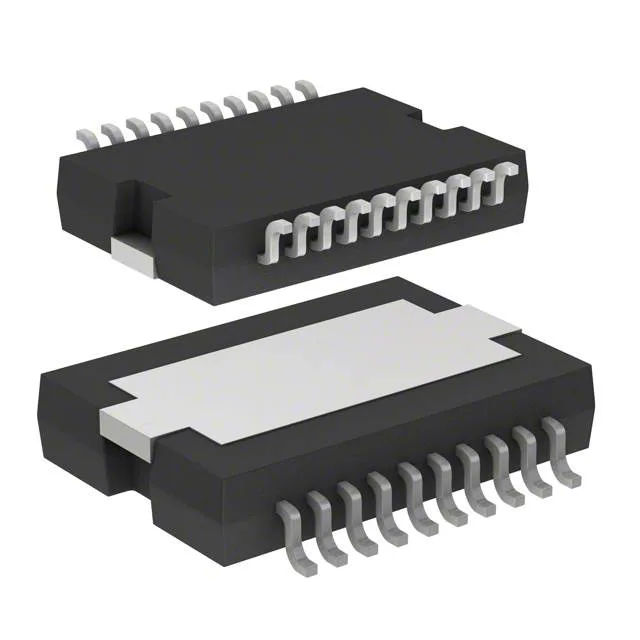
STMicroelectronics STPS60L30CKY-TR — Discrete Semiconductors

STPS60L30CKY-TR Schottky Diode, 30A, 30V, AEC-Q101

MPNSTPS60L30CKY-TR
Active

STMicroelectronics STPS60L30CKY-TR, Automotive Schottky Diode, 1 Pair Common Cathode, 30 V, 30 A, 490 mV @ 30 A, PowerSO-20, AEC-Q101

$4.8186Ref. price · indicative, final on quote
Independent supplier — new & surplus stockAuthenticity-screened · ESD-safe packingListing updated Aug 2026

Specifications

STPS60L30CKY-TR specifications
ParameterValue
MountingSurface Mount
Voltage - DC reverse (Vr)30 V
Voltage - forward (Vf) (Max) @ if490 mV @ 30 A
Current - reverse leakage @ vr2 mA @ 30 V
Current - average rectified (Io) (per diode)30A
Operating temperature - junction-40°C ~ 150°C
GradeAutomotive
SpeedFast Recovery =< 500ns, > 200mA (Io)
PackageTape & Reel (TR) Cut Tape (CT)
TechnologySchottky
QualificationAEC-Q101
Case20-SOIC (0.433\", 11.00mm Width) Exposed Pad
Diode configuration1 Pair Common Cathode

Product details

30 A per leg, common-cathode, PowerSO-20 — what this Schottky pair delivers

The STPS60L30CKY-TR: Each diode is rated for 30 A of continuous forward current (Io) with a maximum reverse voltage of 30 V, and the forward voltage drop is specified at 490 mV maximum at 30 A — a low Vf that keeps conduction losses manageable in high-current power paths.

Forward drop and leakage — the thermal budget drivers

At 30 A per diode, the 490 mV Vf maximum sets the conduction loss floor. The reverse leakage is 2 mA at 30 V (Vr). The common-cathode arrangement means the two anodes are independent while the cathodes share a common node — a topology used in OR-ing diodes, half-bridge rectifiers, and center-tap secondary windings where the cathodes tie to the same output rail.

Active production, AEC-Q101, and sourcing posture

AEC-Q101 qualification is confirmed, covering the stress tests required for automotive-grade semiconductors.

Frequently asked questions

Is STPS60L30CKY-TR AEC-Q101 qualified?

Yes, STPS60L30CKY-TR is AEC-Q101 qualified, which is the automotive stress-test qualification for discrete semiconductors. This covers the reliability testing needed for under-hood and chassis-domain applications.