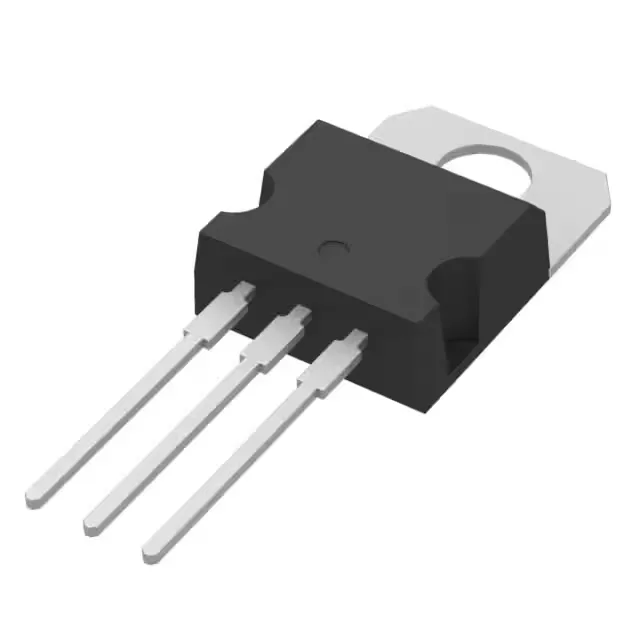
STMicroelectronics STPS40M120CT — Discrete Semiconductors

STPS40M120CT Schottky Diode Array, 120V 20A TO-220-3

MPNSTPS40M120CT
Active

STMicroelectronics STPS40M120CT, Schottky diode array, 1 pair common cathode, 120 V DC reverse voltage, 20 A average rectified current per diode, 790 mV forward drop at 20 A, fast recovery ≤500 ns, TO-220-3 through-hole package.

$3.3500Ref. price · indicative, final on quote
PackagingTO-220-3
RoHSROHS3 Compliant
Independent supplier — new & surplus stockAuthenticity-screened · ESD-safe packingListing updated Aug 2026

Specifications

STPS40M120CT specifications
ParameterValue
Diode typeSchottky
MountingThrough Hole
Voltage - DC reverse (Vr)120 V
Voltage - forward (Vf) (Max) @ if790 mV @ 20 A
Current - reverse leakage @ vr370 µA @ 120 V
Current - average rectified (Io) (per diode)20A
Operating temperature - junction150°C(Max)
SpeedFast Recovery =< 500ns, > 200mA (Io)
PackageTube
CaseTO-220-3
Diode configuration1 Pair Common Cathode

Product details

Dual Schottky rectifier for 120 V rails

It pairs two 20 A Schottky diodes with a common cathode configuration, rated for a maximum DC reverse voltage of 120 V. Forward voltage is specified at 790 mV when each diode carries 20 A, keeping conduction losses manageable in continuous-current designs.

It is ROHS3 compliant, covering the latest exemption categories for EU and global markets.

Frequently asked questions

Can STPS40M120CT replace STPS40L120CT?

The STPS40L120CT is a lower-Vf variant (typically 0.57 V at 20 A) but with higher leakage at temperature. The STPS40M120CT has a higher forward voltage (790 mV at 20 A) but lower reverse leakage (370 µA at 120 V). They are pin-compatible in the same TO-220-3 footprint, so a direct swap is possible if the higher Vf is acceptable in your thermal budget and the lower leakage is beneficial for high-temperature operation.

Is STPS40M120CT RoHS compliant?

Yes, it is ROHS3 compliant.

Is STPS40M120CT suitable for high-frequency applications?

The Schottky barrier provides fast recovery (≤500 ns) with no stored charge, making it suitable for moderate-frequency switching up to around 100 kHz. For higher frequencies (above 200 kHz), junction capacitance becomes a factor — review the datasheet's capacitance vs reverse voltage curve for your specific operating voltage.