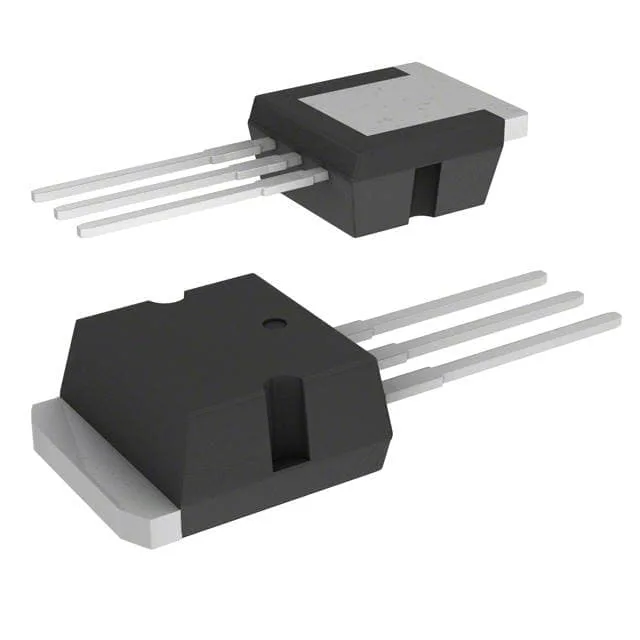
STMicroelectronics STPS20SM80CR — Discrete Semiconductors

STPS20SM80CR Schottky diode, 80 V 10 A dual common cathode

MPNSTPS20SM80CR
Obsolete

STMicroelectronics STPS20SM80CR dual Schottky rectifier, 80 V reverse voltage, 10 A per diode, 780 mV forward drop at 10 A, TO-262 (I2PAK) through-hole package, 175 °C junction temperature.

Independent supplier — new & surplus stockAuthenticity-screened · ESD-safe packingListing updated Jul 2026

Specifications

STPS20SM80CR specifications
ParameterValue
Diode typeSchottky
MountingThrough Hole
Voltage - DC reverse (Vr)80 V
Voltage - forward (Vf) (Max) @ if780 mV @ 10 A
Current - reverse leakage @ vr25 µA @ 80 V
Current - average rectified (Io) (per diode)10A
Operating temperature - junction175°C(Max)
SpeedFast Recovery =< 500ns, > 200mA (Io)
PackageTube
CaseTO-262-3 Long Leads, I²Pak, TO-262AA
Diode configuration1 Pair Common Cathode

Product details

Obsolete — plan your BOM now

The STPS20SM80CR is listed as obsolete. No further production runs are scheduled. For new builds or repairs, source through the surplus and broker channel. We can quote against an RFQ from our independent distribution network.

The 780 mV forward voltage at 10 A is typical for a 80 V Schottky at this current — expect about 7.8 W conduction loss per diode at full load, which the I2PAK through-hole package handles with a proper heatsink.

Housed in a TO-262 (I2PAK) through-hole package with long leads. The I2PAK is the isolated-tab variant of TO-220 — the metal tab is electrically isolated, so no insulating pad is needed between the tab and the heatsink. Mount with the tab screw to a heatsink for any continuous load above a few amps.

Frequently asked questions

Is STPS20SM80CR obsolete?

Yes, STPS20SM80CR is listed as obsolete. It is no longer in production.

What is the replacement for STPS20SM80CR?

No official replacement is listed. For a pin-compatible substitute, look for a dual common-cathode Schottky in I2PAK rated at 80 V or higher and 10 A per diode. The forward voltage and switching speed should match the original design's thermal and efficiency targets.