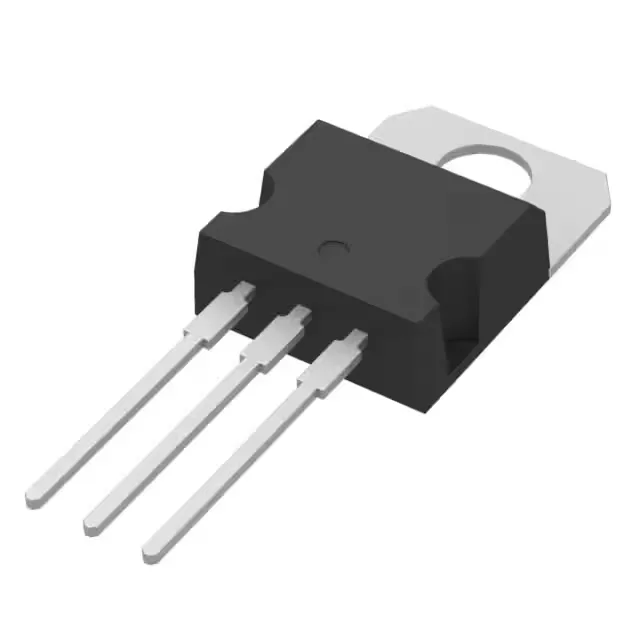
It pairs two 10 A diodes (20 A total average rectified current) with a maximum reverse voltage of 25 V. The forward voltage drop is 460 mV at 10 A per diode, which keeps conduction losses low in high-current paths like OR-ing diodes, output rectification in low-voltage switch-mode supplies, and reverse-polarity protection. The fast recovery characteristic (≤500 ns, >200 mA) means it handles switching frequencies where a standard PN diode would burn recovery losses — think 50–200 kHz PSU secondaries or DC-DC converter outputs.
For a shortage-desk buyer, this part is not in the allocation squeeze that hits niche or end-of-life parts; it is a mainstream Schottky that moves through both franchised and independent channels. If you are filling a BOM line and need traceable stock, the active status plus the dual-sourced nature of the TO-220 Schottky market means lead times are generally manageable — but always verify the date code and supply route for your specific volume window.
Thermal and mounting — the TO-220 tab is your heatsink interface
The TO-220-3 package (Supplier Device Package TO-220) has a metal tab that must be electrically isolated or connected to the common-cathode output rail — the tab is at cathode potential. Maximum junction temperature is 150 °C, so the thermal design needs to keep Tj below that under worst-case load. At 460 mV Vf and 10 A per diode, each diode dissipates about 4.6 W; with both diodes conducting, the total can hit 9.2 W. That demands a heatsink with adequate thermal resistance — a clip-on or bolt-on TO-220 heatsink in still air typically handles 2–4 W; forced air or a larger extruded sink is needed for the full dual-diode load. The through-hole leads also mean the part is mechanically robust for high-vibration environments, but it adds a manual insertion step versus SMD alternatives.